You spend eight hours in bed, but do you actually sleep for eight hours?
Many people are surprised to learn that the answer is often no. Time spent tossing and turning, waking up during the night, or struggling to fall asleep all reduce the amount of actual sleep you get.
That’s why sleep specialists pay attention to sleep efficiency. This metric helps determine how effectively you sleep while you’re in bed.
If you’ve checked your sleep tracker and wondered whether your score is good or bad, this guide will help you understand exactly what a healthy sleep efficiency score looks like and what you can do to improve it.
What Is a Good Sleep Efficiency?
Quick Answer
A good sleep efficiency score is generally 85% or higher.
Most sleep experts consider:
| Sleep Efficiency | Rating |
| 95% or Higher | Excellent |
| 85%–94% | Good |
| 75%–84% | Fair |
| Below 75% | Poor |
For most healthy adults, a sleep efficiency score above 85% indicates that they spend the majority of their time in bed actually sleeping.
What Does Sleep Efficiency Mean?
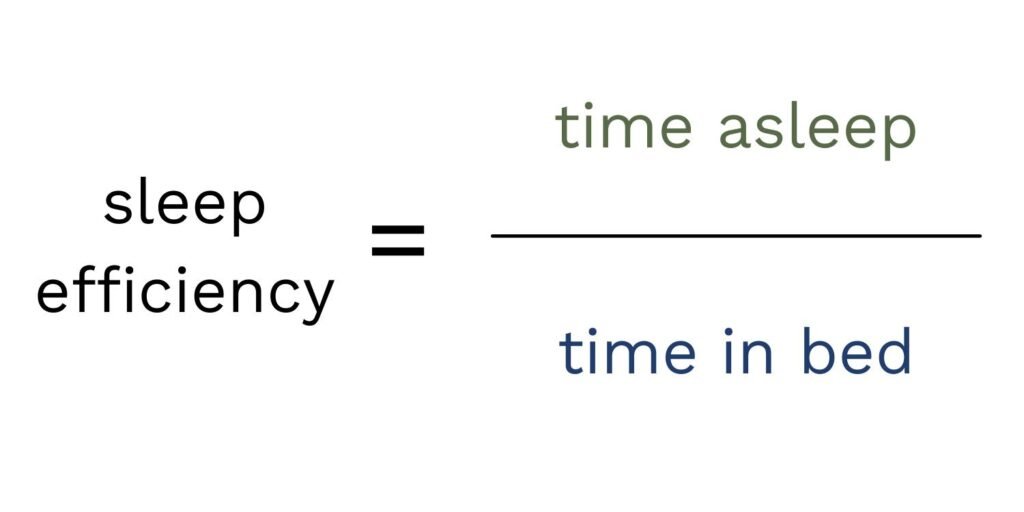
Sleep efficiency measures the percentage of time you spend asleep compared to the total time you spend in bed.
Sleep Efficiency Formula
Sleep Efficiency (%) = (Total Sleep Time ÷ Total Time in Bed) × 100
For example:
- Time in bed: 8 hours
- Actual sleep: 7 hours
Calculation:
(7 ÷ 8) × 100 = 87.5%
This means you were asleep for 87.5% of the time you spent in bed.

Why Is Sleep Efficiency Important?
Sleep duration tells you how long you slept.
Sleep efficiency tells you how effectively you slept.
For example:
Two people may spend 8 hours in bed.
| Person | Time Asleep | Efficiency |
| A | 7.8 Hours | 97.5% |
| B | 6 Hours | 75% |
Although both spent the same amount of time in bed, Person A experienced much more efficient sleep.
Higher sleep efficiency is often associated with:
- Better daytime energy
- Improved focus
- Better mood
- More restorative sleep
- Fewer nighttime awakenings
What Is Considered Excellent Sleep Efficiency?
Quick Answer
Sleep efficiency above 95% is generally considered excellent.
People in this range typically:
- Fall asleep quickly
- Stay asleep throughout the night
- Experience minimal awakenings
- Wake feeling refreshed
However, consistently trying to achieve perfect sleep can sometimes create unnecessary stress.
The goal is healthy, sustainable sleep rather than perfection.
Is 80% Sleep Efficiency Good?
An 80% sleep efficiency score falls into the fair range.
While it’s not necessarily alarming, it may indicate:
- Difficulty falling asleep
- Frequent nighttime awakenings
- Sleep disruptions
- Inconsistent sleep habits
Occasional scores around 80% are common.
Persistent scores below 85% may suggest room for improvement.
Is 70% Sleep Efficiency Bad?
Quick Answer
A sleep efficiency score around 70% is generally considered low.
At this level, a significant amount of time in bed is spent awake.
Potential causes include:
- Insomnia
- Anxiety
- Stress
- Sleep apnea
- Restless legs syndrome
- Poor sleep hygiene
If low scores continue for several weeks, consider discussing your sleep concerns with a healthcare professional.
How Age Affects Sleep Efficiency
Sleep efficiency naturally changes throughout life.
Younger Adults
Healthy younger adults often achieve:
- 90%–95% sleep efficiency
Middle-Aged Adults
Sleep efficiency may gradually decline due to:
- Lifestyle factors
- Stress
- Hormonal changes
Older Adults
Many older adults experience:
- More nighttime awakenings
- Lighter sleep
- Lower sleep efficiency scores
A slightly lower score may be normal with aging.
What Causes Low Sleep Efficiency?
Several factors can reduce sleep efficiency.
Stress and Anxiety
Mental stress often makes it harder to fall asleep and stay asleep.
Poor Sleep Schedule
Irregular bedtimes can disrupt your circadian rhythm.
Excessive Screen Time
Blue light exposure before bed may delay sleep onset.
Caffeine and Alcohol
Both can interfere with healthy sleep patterns.
Sleep Disorders
Conditions commonly associated with low sleep efficiency include:
- Sleep apnea
- Chronic insomnia
- Restless legs syndrome
- Circadian rhythm disorders
How Sleep Trackers Measure Sleep Efficiency

Most modern sleep trackers estimate sleep efficiency automatically.
They analyze:
- Body movement
- Heart rate
- Sleep stages
- Wake periods
Popular devices often include sleep efficiency within nightly sleep reports.
Although helpful, these measurements should be viewed as estimates rather than medical diagnoses.
How to Improve Sleep Efficiency
Maintain a Consistent Sleep Schedule
Going to bed and waking up at the same time daily supports healthy sleep patterns.
Reduce Evening Screen Time
Try avoiding bright screens for at least one hour before bedtime.
Create a Better Sleep Environment
A sleep-friendly bedroom should be:
- Quiet
- Cool
- Dark
- Comfortable
Limit Late-Day Caffeine
Caffeine can remain in your system for several hours and delay sleep onset.
Use Sleep Timing Tools
Tools such as:
- Sleep Calculator
- Sleep Cycle Calculator
- Nap Calculator
- Jet Lag Calculator
can help optimize sleep timing and improve overall sleep habits.
Sleep Efficiency vs Sleep Quality
These terms are often used interchangeably but mean different things.
| Sleep Efficiency | Sleep Quality |
| Percentage of time asleep | Overall sleep experience |
| Measured mathematically | More subjective |
| Focuses on sleep duration | Focuses on restfulness |
Someone can have good sleep efficiency but still experience poor sleep quality if sleep stages are disrupted.
When Should You Be Concerned About Low Sleep Efficiency?
You may want to seek professional advice if:
- Sleep efficiency remains below 75%
- You experience excessive daytime sleepiness
- You regularly wake during the night
- Sleep problems affect daily life
- You suspect sleep apnea
Persistent sleep difficulties deserve proper evaluation.
Frequently Asked Questions
What is a good sleep efficiency score?
Most sleep experts recommend a score of at least 85%.
Is 90% sleep efficiency good?
Yes. A score of 90% is generally considered very good and indicates efficient sleep.
Is 70% sleep efficiency bad?
A score around 70% is considered low and may indicate sleep disruption.
Can sleep trackers measure sleep efficiency?
Yes. Most modern sleep trackers estimate sleep efficiency automatically.
Does sleep efficiency improve sleep quality?
Improving sleep efficiency often helps improve overall sleep quality, although they are not identical measures.
Conclusion
A good sleep efficiency score is generally 85% or higher, while scores above 95% are considered excellent. Sleep efficiency provides valuable insight into how effectively you’re sleeping, not just how long you’re spending in bed.
If your score is consistently low, improving sleep habits, maintaining a regular schedule, and using tools like a sleep calculator can help you achieve more restorative sleep and better daytime energy.