Many people think that sleeping longer automatically means better rest. However, the amount of time you spend in bed does not always match the amount of time you spend asleep. This is where understanding the sleep efficiency definition becomes important.
Sleep efficiency is a measurement used by sleep experts to determine how effectively a person sleeps during the time they spend in bed. A high sleep efficiency percentage usually means you fall asleep relatively quickly, remain asleep throughout most of the night, and experience fewer interruptions.
This guide explains the definition of sleep efficiency, the formula used to calculate it, what your score means, and how to improve it.
What Is the Definition of Sleep Efficiency?
Quick Answer
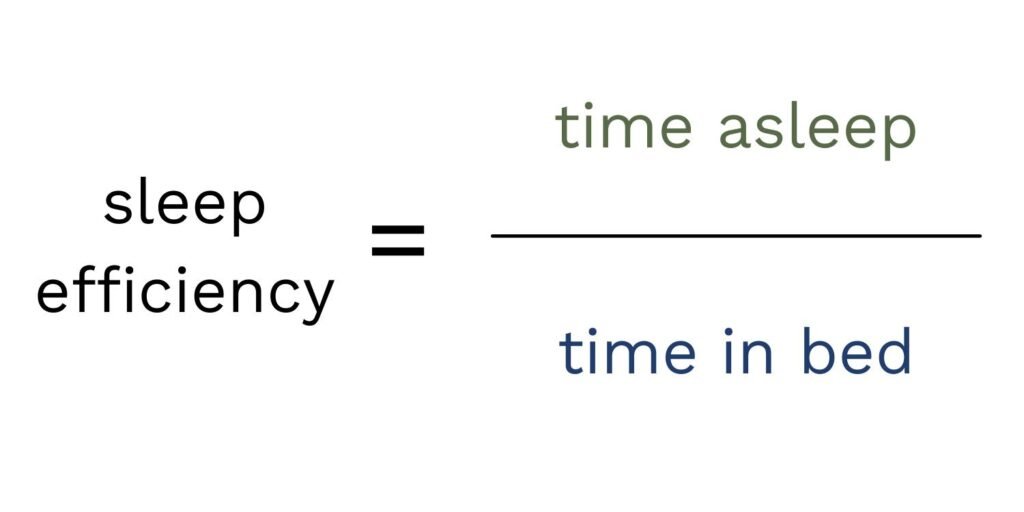
Sleep efficiency is the percentage of total time spent asleep compared with the total amount of time spent in bed.
In simple terms, it shows how effectively your time in bed turns into actual sleep.
For example, if you stay in bed for 8 hours but sleep for 7 hours, your sleep efficiency is:
(7 ÷ 8) × 100 = 87.5%
A higher percentage generally indicates more continuous and efficient sleep.
Why Is Sleep Efficiency Important?
Sleep efficiency gives a deeper understanding of your sleep health than simply counting hours.
For example:
| Person | Time in Bed | Actual Sleep | Sleep Efficiency |
|---|---|---|---|
| Person A | 8 hours | 7.5 hours | 93.7% |
| Person B | 8 hours | 5.5 hours | 68.7% |
Although both individuals spent the same amount of time in bed, Person A experienced more efficient sleep with fewer interruptions.
Good sleep efficiency is associated with:
- Better daytime energy
- Improved concentration
- Better mood stability
- Less daytime sleepiness
- More consistent sleep patterns
How Is Sleep Efficiency Measured?
Quick Answer
Sleep efficiency is measured by comparing your total sleep time with the total amount of time you spend in bed.
Sleep information can be collected through:
- Sleep diaries
- Wearable sleep trackers
- Smartphone sleep applications
- Professional sleep studies
Sleep specialists may also consider factors such as:
- Sleep latency (time required to fall asleep)
- Number of nighttime awakenings
- Wake time after falling asleep
- Overall sleep continuity
Sleep Efficiency Formula
The standard formula is:
Sleep Efficiency (%) = (Total Sleep Time ÷ Total Time in Bed) × 100
Example
A person goes to bed at 11:00 PM and wakes up at 7:00 AM.
- Total time in bed: 8 hours
- Time spent awake: 45 minutes
- Actual sleep time: 7 hours 15 minutes
Calculation:
7.25 ÷ 8 × 100 = 90.6%
This indicates a healthy sleep efficiency score.
You can also use a Sleep Efficiency Calculator to automatically determine your percentage.
Sleep Efficiency Score Chart
The following chart helps interpret your sleep efficiency.
| Sleep Efficiency Percentage | Interpretation |
|---|---|
| 95% or higher | Excellent sleep efficiency |
| 85%–94% | Good and healthy sleep efficiency |
| 75%–84% | Fair sleep efficiency; improvement may be beneficial |
| Below 75% | Low sleep efficiency that may require attention |
These values are general guidelines and can vary based on age, health, and individual circumstances.
What Is a Good Sleep Efficiency?
Quick Answer
For most adults, a sleep efficiency score of 85% or above is considered healthy.
People with good sleep efficiency usually:
- Fall asleep without excessive delay
- Experience fewer nighttime interruptions
- Spend most of their time in bed sleeping
- Wake up feeling more refreshed
Lower scores may be related to stress, poor sleep habits, environmental factors, or certain sleep disorders.
Factors That Affect Sleep Efficiency
Several factors influence your sleep efficiency.
Lifestyle Factors
- Inconsistent bedtime schedules
- Excess caffeine intake
- Alcohol close to bedtime
- Screen exposure before sleeping
- High stress levels
Environmental Factors
Your bedroom environment can affect sleep quality.
Common problems include:
- Too much light
- Noise disturbances
- Uncomfortable bedding
- An unsuitable room temperature
Health-Related Factors
Lower sleep efficiency may be associated with:
- Insomnia
- Sleep apnea
- Chronic pain
- Anxiety
- Depression
- Medication side effects
If you regularly experience poor sleep efficiency and daytime tiredness, consulting a healthcare professional is recommended.
How to Improve Sleep Efficiency
1. Follow a Regular Sleep Schedule
Going to bed and waking up at the same time every day supports a stable circadian rhythm.
2. Improve Your Sleep Environment
Create better sleeping conditions by:
- Keeping the room cool, quiet, and dark
- Using comfortable bedding
- Reducing noise and distractions
3. Avoid Stimulants Before Bed
Limit:
- Caffeine during the late afternoon and evening
- Nicotine
- Heavy meals before bedtime
4. Manage Stress
Helpful bedtime relaxation strategies include:
- Meditation
- Deep breathing exercises
- Gentle stretching
- Reading a book
5. Track Your Overall Sleep Health
Sleep efficiency is only one measurement of sleep quality. Consider monitoring:
- Sleep duration
- Sleep debt
- Sleep cycles
- Sleep consistency
Tools such as a Sleep Debt Calculator, Sleep Calculator, and Nap Calculator can provide additional insights into your sleep patterns.
Sleep Efficiency vs Sleep Quality
These terms are related but not identical.
| Sleep Efficiency | Sleep Quality |
|---|---|
| Measures how much time in bed is spent asleep | Describes how restorative and satisfying sleep feels |
| Calculated as a percentage | Influenced by sleep stages, comfort, and overall recovery |
| Focuses on sleep continuity | Includes physical and mental restoration |
A person can have high sleep efficiency but still experience poor sleep quality due to other factors affecting sleep.
Expert Tip: Monitor Your Sleep Over Time
A single night of low sleep efficiency does not always indicate a problem. Tracking your sleep over several weeks provides a more accurate picture of your habits and helps identify patterns that may need adjustment.
Frequently Asked Questions
What is the simple definition of sleep efficiency?
Sleep efficiency is the percentage of time you spend asleep compared with the total time you spend in bed.
What is a good sleep efficiency score?
Most adults should aim for a sleep efficiency score of 85% or higher.
Is high sleep efficiency always good?
Generally, higher sleep efficiency indicates better sleep continuity, but it should be evaluated alongside sleep quality, duration, and overall health.
How do doctors measure sleep efficiency?
Healthcare professionals may calculate sleep efficiency using sleep diaries, wearable data, or clinical sleep studies.
Can sleep efficiency improve naturally?
Yes. Better sleep habits, a consistent schedule, a comfortable sleep environment, and stress management can improve sleep efficiency over time.
Conclusion
Understanding the sleep efficiency definition helps you evaluate how well you sleep rather than simply how long you remain in bed. A healthy sleep efficiency percentage is generally 85% or higher, indicating that most of your time in bed is spent sleeping.
Tracking your sleep efficiency alongside sleep duration, sleep debt, and sleep cycles can give you a more complete picture of your overall sleep health. Use tools such as a Sleep Efficiency Calculator, Sleep Debt Calculator, and Sleep Calculator to build healthier sleep habits.