
Most people think of sleep as one continuous state. In reality, your brain remains highly active throughout the night, moving through a series of carefully organized sleep stages.
These stages form what is known as a sleep cycle.
A normal sleep cycle includes light sleep, deep sleep, and REM sleep, with each stage serving a different purpose. Together, these stages support physical recovery, memory formation, emotional regulation, and overall health.
Understanding what a normal sleep cycle looks like can help you better understand your sleep patterns and identify habits that may be affecting sleep quality.
What Does a Normal Sleep Cycle Look Like?
Quick Answer
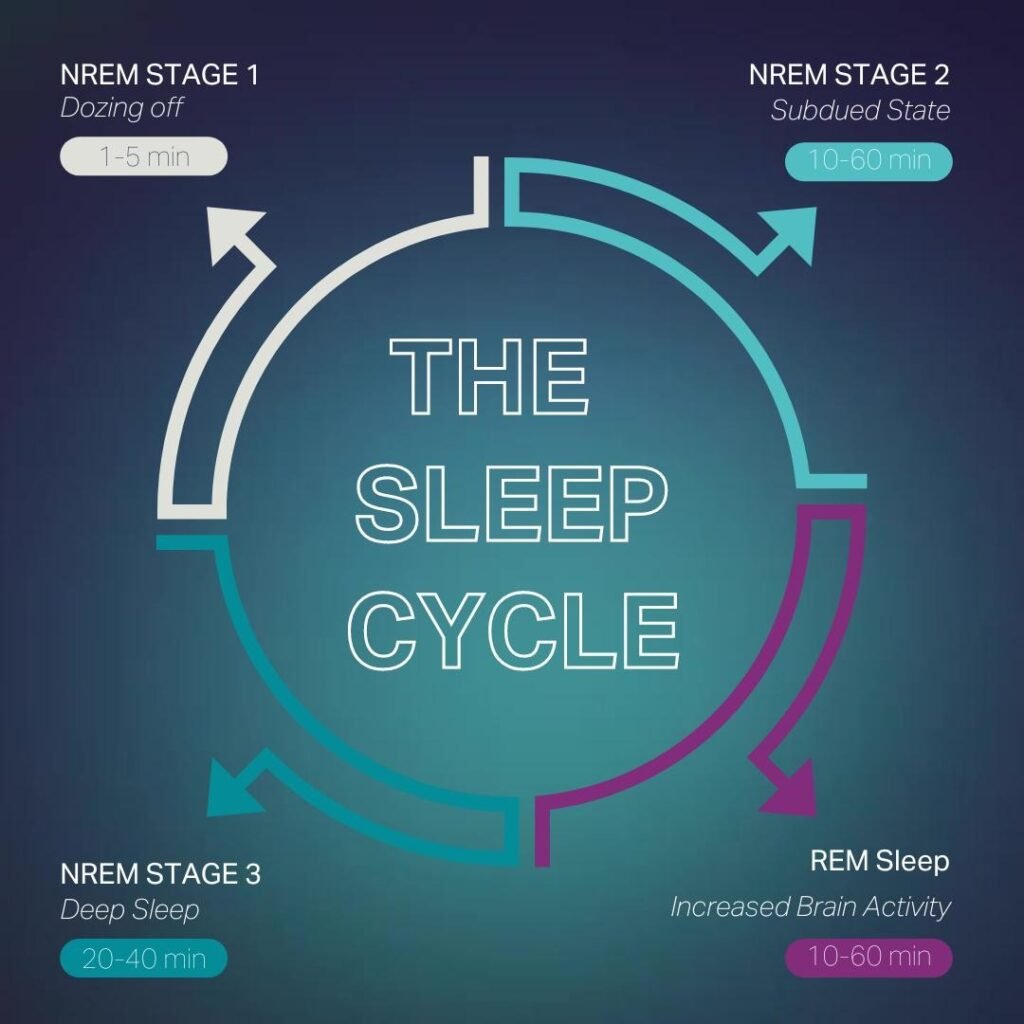
A normal sleep cycle moves through four main stages:
- Stage 1 (Light Sleep)
- Stage 2 (Light Sleep)
- Stage 3 (Deep Sleep)
- REM Sleep
The average cycle lasts about 90 minutes, and most adults complete 4 to 6 cycles each night.
Each cycle repeats throughout the night, although the amount of deep sleep and REM sleep changes as morning approaches.
The Four Stages of a Normal Sleep Cycle
Stage 1 Sleep (N1)
Stage 1 is the transition between wakefulness and sleep.
Characteristics include:
- Slower breathing
- Reduced muscle activity
- Light sleep
- Easy awakening
Most people spend only a few minutes in this stage.
Stage 2 Sleep (N2)
Stage 2 is the longest stage of sleep for most adults.
During this stage:
- Heart rate slows
- Body temperature decreases
- Brain activity changes
- Muscles relax further
Adults typically spend about 45–55% of their sleep time in Stage 2.
Stage 3 Sleep (Deep Sleep)
Stage 3 is often called deep sleep or slow-wave sleep.
This stage is important for:
- Physical recovery
- Muscle repair
- Immune function
- Hormone production
Waking during deep sleep often causes grogginess and disorientation.
REM Sleep
REM stands for Rapid Eye Movement.
During REM sleep:
- Dreams become more vivid
- Brain activity increases
- Memory processing occurs
- Emotional regulation improves
REM sleep becomes longer with each cycle throughout the night.
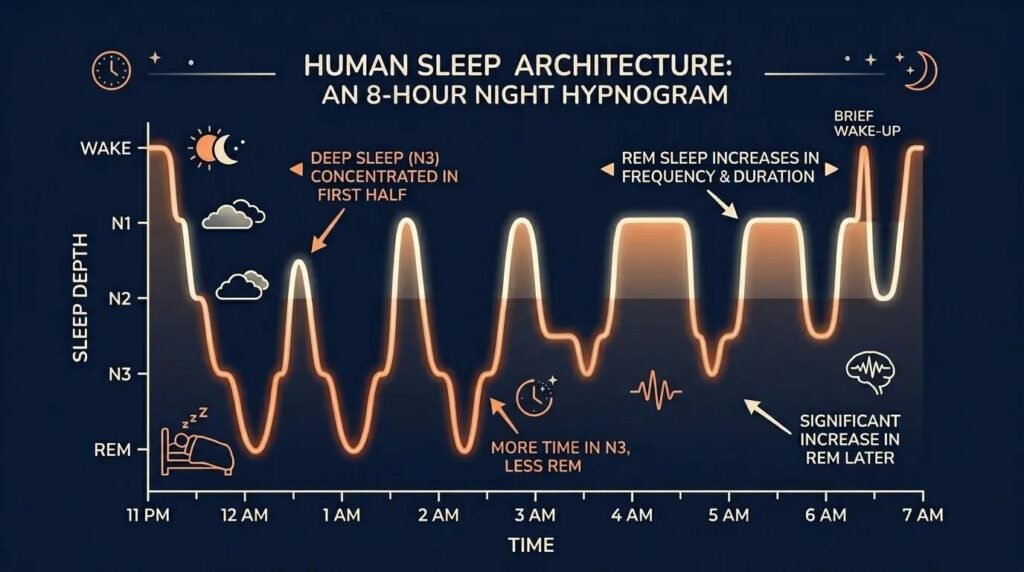
How a Normal Sleep Cycle Changes During the Night
A common misconception is that each sleep cycle is identical.
In reality, sleep architecture changes as the night progresses.
Early Night
The first few sleep cycles contain:
- More deep sleep
- Less REM sleep
Late Night
The final sleep cycles contain:
- Less deep sleep
- More REM sleep
This is why vivid dreaming often occurs closer to morning.
Example of a Normal Night’s Sleep
A healthy adult sleeping for approximately eight hours may experience:
| Sleep Cycle | Main Characteristics |
| Cycle 1 | More deep sleep |
| Cycle 2 | Deep sleep continues |
| Cycle 3 | Balanced deep and REM sleep |
| Cycle 4 | Less deep sleep, more REM |
| Cycle 5 | Long REM periods |
| Cycle 6 | Highest REM activity |
This pattern helps support both physical and mental recovery.
How Long Does Each Sleep Stage Last?
Although sleep stages vary between individuals, a typical cycle may look like this:
| Sleep Stage | Approximate Duration |
| Stage 1 | 1–7 Minutes |
| Stage 2 | 10–25 Minutes |
| Stage 3 | 20–40 Minutes |
| REM Sleep | 10–60 Minutes |
REM sleep tends to increase as the night progresses.
Why a Normal Sleep Cycle Matters
Better Physical Recovery
Deep sleep helps repair tissues and support immune function.
Improved Memory
REM sleep plays a major role in memory consolidation and learning.
Emotional Balance
Healthy sleep cycles help regulate emotions and stress responses.
Increased Daytime Performance
Consistent sleep cycles often improve:
- Concentration
- Productivity
- Reaction times
- Energy levels
What Can Disrupt a Normal Sleep Cycle?

Several factors can interfere with healthy sleep cycles.
Stress and Anxiety
Mental stress often increases nighttime awakenings.
Caffeine
Late-day caffeine may delay sleep onset.
Alcohol
Alcohol can disrupt REM sleep and overall sleep quality.
Irregular Sleep Schedules
Frequently changing bedtimes can affect circadian rhythms.
Sleep Disorders
Conditions that commonly disrupt sleep cycles include:
- Sleep apnea
- Insomnia
- Restless legs syndrome
These issues may reduce sleep quality even if total sleep duration appears adequate.
What Does a Healthy Sleep Pattern Look Like?
Quick Answer
A healthy sleep pattern typically includes:
- Falling asleep within 15–20 minutes
- Completing 4–6 sleep cycles
- Minimal nighttime awakenings
- Adequate deep sleep and REM sleep
- Waking up feeling refreshed
Consistency is often just as important as total sleep duration.
Can Sleep Trackers Show Sleep Cycles?
Many modern sleep trackers estimate:
- Sleep stages
- Sleep duration
- REM sleep
- Deep sleep
- Sleep efficiency
While these tools can be helpful, they provide estimates rather than clinical measurements.
Professional sleep studies remain the most accurate way to evaluate sleep architecture.
How to Support Healthy Sleep Cycles
Maintain a Consistent Sleep Schedule
Going to bed and waking up at similar times supports healthy sleep architecture.
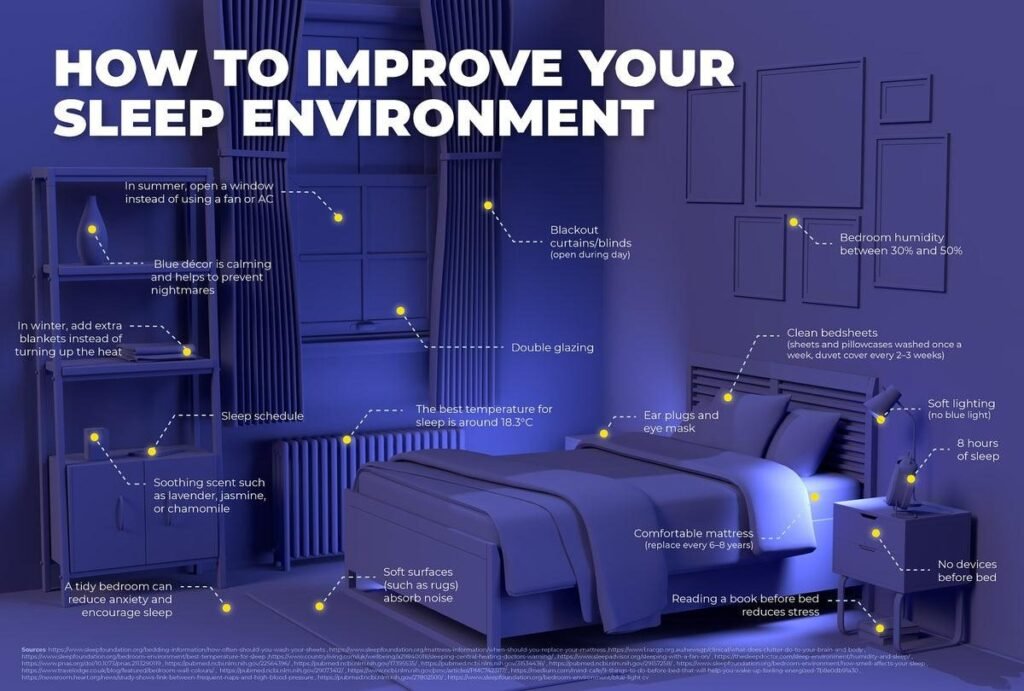
Create a Better Sleep Environment
Focus on:
- Darkness
- Quiet surroundings
- Comfortable bedding
- Cooler room temperatures
Limit Evening Screen Exposure
Blue light may interfere with natural sleep signals.
Stay Physically Active
Regular exercise often supports healthier sleep patterns.
Use Sleep Planning Tools
Helpful resources include:
- Sleep Calculator
- Sleep Cycle Calculator
- Sleep Schedule Calculator
- Nap Calculator
- Jet Lag Calculator
These tools can help optimize sleep timing and improve sleep consistency.
Normal Sleep Cycle vs Poor Sleep Cycle
| Healthy Sleep Cycle | Disrupted Sleep Cycle |
| Consistent sleep stages | Frequent interruptions |
| Adequate REM sleep | Reduced REM sleep |
| Healthy deep sleep | Limited deep sleep |
| Refreshing sleep | Persistent fatigue |
| Stable energy levels | Daytime sleepiness |
Recognizing these differences can help identify sleep-related concerns.
Frequently Asked Questions
What does a normal sleep cycle look like?
A normal sleep cycle includes light sleep, deep sleep, and REM sleep and lasts about 90 minutes.
How many sleep cycles should adults get?
Most adults complete 4–6 sleep cycles each night.
Does REM sleep occur in every cycle?
Yes. REM sleep occurs in each cycle but becomes longer later in the night.
Why is deep sleep important?
Deep sleep supports physical recovery, immune function, and tissue repair.
Can sleep trackers measure sleep cycles?
Most trackers estimate sleep cycles, but professional sleep studies provide more accurate measurements.
Conclusion
A normal sleep cycle consists of multiple stages that repeat throughout the night, helping the body recover physically and mentally. Most adults complete four to six cycles per night, with each cycle lasting approximately 90 minutes.
Understanding what a healthy sleep cycle looks like can help you improve sleep habits, recognize potential sleep problems, and support better overall health and well-being.