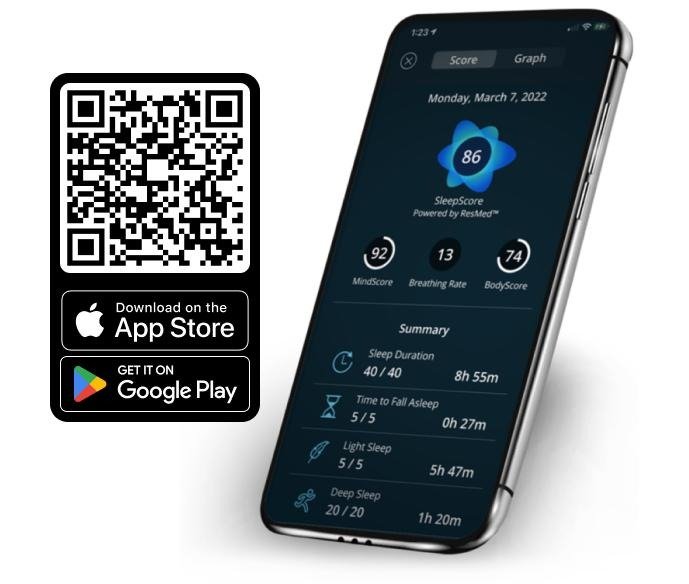
Many modern sleep trackers provide a sleep score every morning. You wake up, check your watch or app, and see a number such as 82, 90, or 68.
But what does that number actually mean?
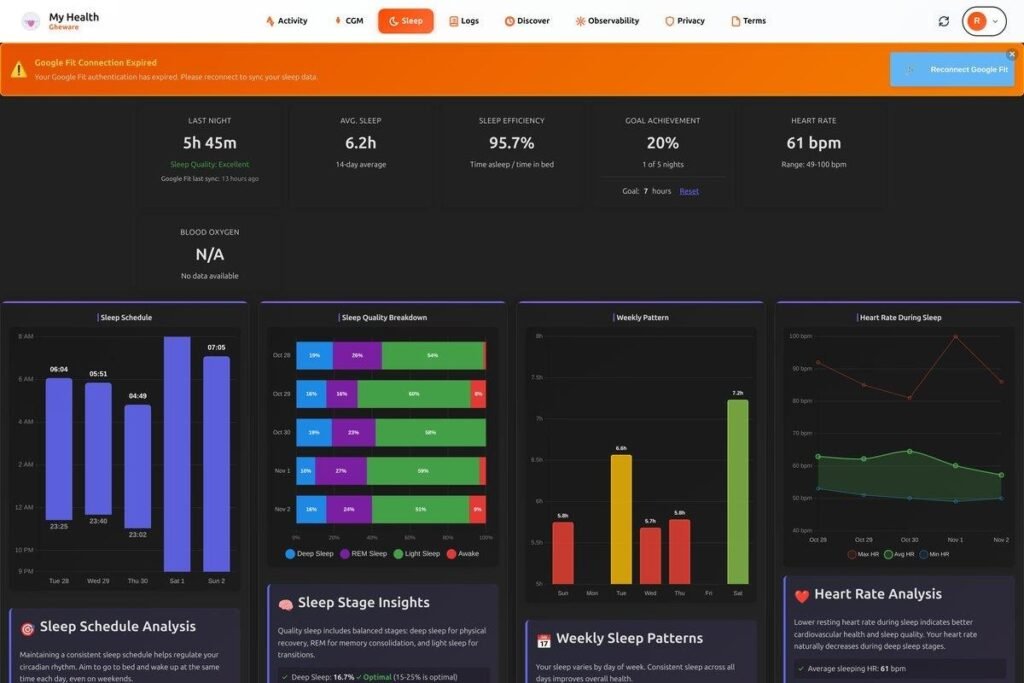
A sleep score is designed to simplify complex sleep data into an easy-to-understand measurement. Instead of analyzing dozens of sleep metrics separately, sleep trackers combine multiple factors into a single score.
Understanding sleep score calculation can help you make sense of your sleep data, identify habits that may be hurting your sleep, and improve your overall sleep quality.
What Is Sleep Score Calculation?
Quick Answer
Sleep score calculation is the process of combining multiple sleep metrics into a single number that reflects overall sleep quality and recovery.
Most sleep scores consider factors such as:
- Sleep duration
- Sleep efficiency
- Sleep consistency
- Sleep stages
- Nighttime awakenings
- Heart rate patterns
- Recovery indicators
The final score is usually displayed on a scale from 0 to 100.
Why Sleep Scores Exist
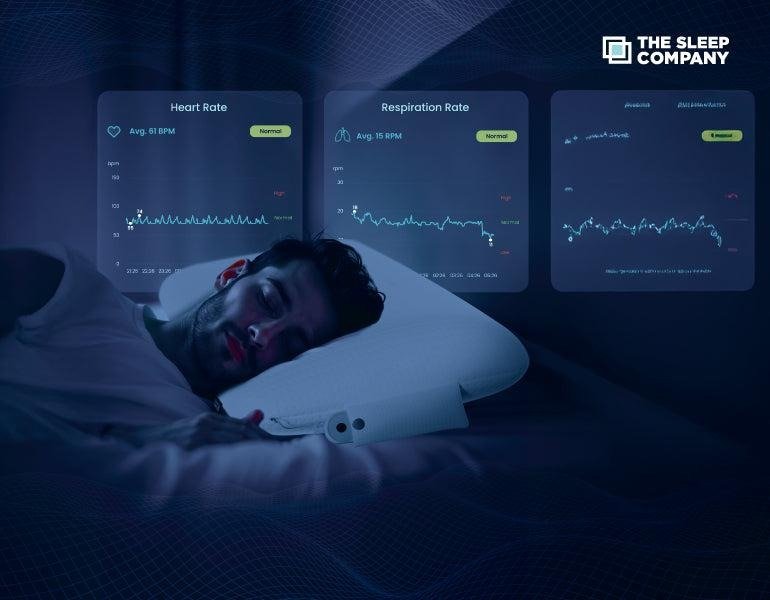
Sleep produces a large amount of data.
Modern sleep trackers may record:
- Sleep duration
- REM sleep
- Deep sleep
- Heart rate
- Breathing patterns
- Movement during sleep
Without a summary score, interpreting all this information would be difficult.
Sleep scores provide a simple snapshot of overall sleep performance.
How Sleep Score Calculation Works
Quick Answer
Most sleep trackers use proprietary algorithms that assign values to different sleep metrics and combine them into a final score.
Although each brand uses its own formula, most systems evaluate similar factors.
These commonly include:
- Sleep Duration
- Sleep Efficiency
- Sleep Stages
- Sleep Consistency
- Nighttime Disturbances
- Recovery Metrics
The final score represents overall sleep quality.
Sleep Duration and Sleep Scores
Sleep duration is one of the largest contributors to sleep score calculations.
Recommended sleep amounts:
| Age Group | Recommended Sleep |
| Teenagers | 8–10 Hours |
| Adults | 7–9 Hours |
| Older Adults | 7–8 Hours |
Sleeping significantly less than recommended often lowers sleep scores.
However, sleeping longer does not automatically guarantee a better score.
Sleep Efficiency and Sleep Score Calculation
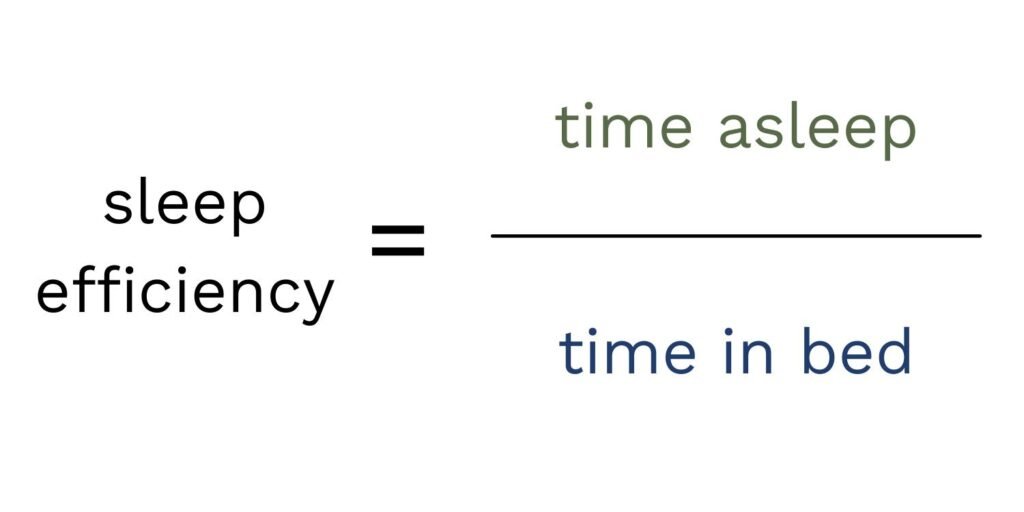
Sleep efficiency measures how effectively you sleep while in bed.
Sleep Efficiency Formula
Sleep Efficiency = (Total Sleep Time ÷ Total Time in Bed) × 100
Example:
- Time in bed: 8 hours
- Actual sleep: 7 hours
Sleep Efficiency:
87.5%
Higher sleep efficiency often contributes positively to sleep scores.
Sleep Stages and Sleep Scores
Healthy sleep includes several stages.
Light Sleep
Supports transition through sleep cycles.
Deep Sleep
Important for physical recovery and immune function.
REM Sleep
Supports memory, learning, and emotional processing.
Sleep trackers often evaluate how much time you spend in each stage.
Balanced sleep stage distribution usually contributes to higher sleep scores.
Sleep Consistency and Sleep Scores
Many sleep-tracking devices evaluate consistency.
Factors include:
- Bedtime regularity
- Wake-up consistency
- Stable sleep schedules
Consistent sleep patterns help regulate circadian rhythms and often improve overall sleep scores.
Nighttime Disturbances and Sleep Scores
Frequent awakenings can lower sleep quality and reduce sleep scores.
Examples include:
- Bathroom trips
- Noise disturbances
- Stress-related awakenings
- Sleep apnea episodes
The more fragmented your sleep becomes, the lower your sleep score may be.
Heart Rate and Recovery Metrics
Some advanced sleep trackers also analyze recovery indicators.
Examples include:
Resting Heart Rate
Lower nighttime heart rates often indicate better recovery.
Heart Rate Variability (HRV)
Higher HRV is generally associated with better recovery and stress management.
Respiratory Patterns
Abnormal breathing patterns may influence sleep quality assessments.
These metrics help create a more complete picture of sleep health.
What Is a Good Sleep Score?
Quick Answer
Most sleep trackers use the following ranges:
| Sleep Score | Rating |
| 90–100 | Excellent |
| 80–89 | Good |
| 70–79 | Fair |
| Below 70 | Poor |
A score above 80 is generally considered healthy for most adults.
Sleep Score vs Sleep Quality
Although related, these terms are not identical.
| Sleep Score | Sleep Quality |
| Numerical value | Overall sleep experience |
| Generated by algorithms | Can be subjective |
| Easy to compare | Broader assessment |
| Often device-based | Includes personal perception |
A sleep score provides an estimate, while sleep quality includes how rested you actually feel.
Factors That Can Lower Your Sleep Score

Several habits and conditions can negatively affect sleep scores.
Stress and Anxiety
Mental stress often increases nighttime awakenings.
Screen Exposure Before Bed
Blue light may delay melatonin production and affect sleep onset.
Caffeine Consumption
Late-day caffeine can reduce sleep quality.
Alcohol Use
Alcohol often disrupts later sleep cycles.
Irregular Sleep Schedules
Changing bedtimes frequently may lower consistency scores.
How to Improve Sleep Scores
Follow a Consistent Sleep Schedule
Try sleeping and waking at the same times daily.
Improve Sleep Hygiene
Good habits include:
- Limiting screen time
- Avoiding late caffeine
- Maintaining a cool bedroom
- Creating a relaxing bedtime routine
Exercise Regularly
Physical activity often improves sleep quality and recovery.
Use Sleep Planning Tools
Helpful resources include:
- Sleep Calculator
- Sleep Schedule Calculator
- Sleep Cycle Calculator
- Nap Calculator
- Jet Lag Calculator
These tools can help optimize sleep timing and improve consistency.
Are Sleep Scores Accurate?
Quick Answer
Sleep scores are useful estimates but are not medical diagnoses.
Different brands use different algorithms, so scores may vary between devices.
The most valuable insight comes from tracking trends over time rather than focusing on a single night’s score.
Frequently Asked Questions
What is sleep score calculation?
Sleep score calculation combines multiple sleep metrics into a single numerical score.
What factors affect sleep scores?
Common factors include sleep duration, sleep efficiency, sleep stages, consistency, and nighttime awakenings.
What is considered a good sleep score?
Most sleep trackers consider scores above 80 to be good and scores above 90 to be excellent.
Can sleep scores diagnose sleep disorders?
No. Sleep scores provide estimates and should not be used as medical diagnoses.
Why do sleep scores change from night to night?
Changes in sleep duration, stress levels, sleep stages, and sleep consistency can affect scores.
Conclusion
Sleep score calculation helps transform complex sleep data into a simple, easy-to-understand measurement. By evaluating factors such as sleep duration, efficiency, stages, and recovery, sleep scores provide valuable insights into overall sleep health.
While no score can perfectly measure sleep quality, tracking sleep scores over time can help identify patterns, improve sleep habits, and support better recovery and daily performance.