Have you ever gone to bed early, spent eight hours in bed, and still woke up feeling tired?
The reason may not be how long you stayed in bed—it may be how much of that time you actually spent sleeping.
This is where a Sleep Efficiency Calculator becomes useful. Instead of simply counting hours in bed, it measures the percentage of time you were actually asleep. Understanding your sleep efficiency can help you recognize sleep patterns, improve your bedtime routine, and make better decisions about your sleep schedule.
Whether you’re tracking your sleep with a smartwatch, a sleep diary, or simply recording your bedtime and wake-up time, a sleep efficiency calculator provides a simple way to monitor your progress.
What Is a Sleep Efficiency Calculator?
Quick Answer
A Sleep Efficiency Calculator measures the percentage of time you spend sleeping compared with the total time you spend in bed.
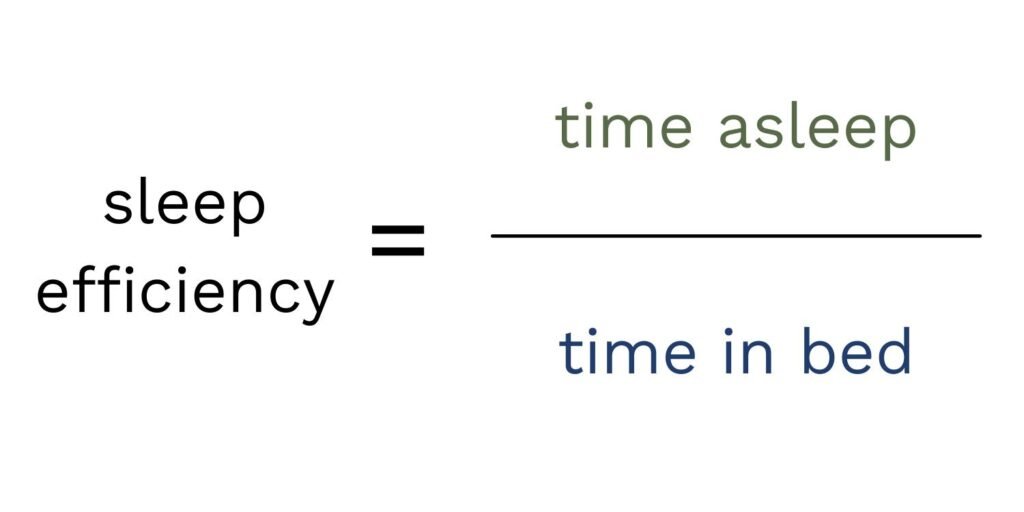
It is calculated using this formula:
Sleep Efficiency (%) = (Total Sleep Time ÷ Time in Bed) × 100
The higher the percentage, the more efficiently you’re sleeping.
How Does a Sleep Efficiency Calculator Work?
The calculator needs two pieces of information:
- Total Time in Bed
- Total Time Asleep
Example
Suppose you:
- Went to bed at 10:00 PM
- Got out of bed at 6:00 AM
Total time in bed:
8 hours
If you actually slept for 7 hours:
Sleep Efficiency = (7 ÷ 8) × 100 = 87.5%
The calculator instantly provides your estimated sleep efficiency percentage.
Sleep Efficiency Example Table
| Time in Bed | Total Sleep | Sleep Efficiency |
| 8 hrs | 8 hrs | 100% |
| 8 hrs | 7.5 hrs | 93.8% |
| 8 hrs | 7 hrs | 87.5% |
| 8 hrs | 6.5 hrs | 81.3% |
| 8 hrs | 6 hrs | 75% |
This helps you understand how efficiently you’re sleeping rather than simply how long you stay in bed.

What Is Considered Good Sleep Efficiency?
Quick Answer
Although individual situations vary, many sleep specialists consider:
| Sleep Efficiency | General Interpretation |
| 95–100% | Excellent |
| 90–94% | Very Good |
| 85–89% | Good |
| 80–84% | Fair |
| Below 80% | Lower Sleep Efficiency |
These ranges are general guidelines rather than medical diagnoses.
Helpful Sleep Tools
If you’re improving your sleep routine, these tools work well together:
A Sleep Calculator helps estimate the best bedtime based on complete sleep cycles, while a Nap Calculator helps you plan naps that fit your daily schedule without increasing grogginess.
Why Does Sleep Efficiency Matter?
Quick Answer
Sleep efficiency helps you understand whether you’re actually sleeping during the time you spend in bed.
Many people assume staying in bed longer automatically means better sleep.
However, if you spend long periods awake before falling asleep or wake frequently during the night, your sleep efficiency decreases.
Monitoring this percentage helps you identify patterns and improve your bedtime routine over time.
What Can Reduce Sleep Efficiency?
Several everyday factors may reduce sleep efficiency.
Examples include:
- Irregular sleep schedules
- Long periods awake in bed
- Frequent nighttime awakenings
- Late caffeine consumption
- Excessive screen time before bed
- Noisy sleep environment
Improving these habits may support better sleep consistency.

How Can You Improve Sleep Efficiency?
Small improvements often make a noticeable difference.
Helpful habits include:
Maintain a Consistent Bedtime
Going to bed and waking up at similar times each day supports your body’s natural sleep rhythm.
Keep Your Bedroom Comfortable
Aim for:
- A cool room
- Minimal light
- Quiet surroundings
- Comfortable bedding
Reduce Evening Screen Time
Limiting phones, tablets, and computers before bedtime may help you fall asleep more easily.
Limit Late Caffeine
Avoiding caffeine late in the day may improve your ability to fall asleep.
Can Naps Affect Sleep Efficiency?
Yes.
Long naps late in the day may make it harder for some people to fall asleep at night.
A Nap Calculator can help you choose a nap duration that supports your nighttime sleep schedule.
What About Jet Lag?
Travel across multiple time zones may temporarily reduce sleep efficiency by disrupting your circadian rhythm.
A Jet Lag Calculator can help estimate recovery time while your body gradually adjusts to the new time zone.
Frequently Asked Questions
What is a Sleep Efficiency Calculator?
A Sleep Efficiency Calculator measures the percentage of time you’re actually asleep compared with the total time you spend in bed.
How is sleep efficiency calculated?
It uses the formula:
Sleep Efficiency = (Total Sleep Time ÷ Time in Bed) × 100
Is 85% sleep efficiency good?
Many sleep experts consider 85% or higher to be a generally healthy level of sleep efficiency.
Can sleep efficiency improve over time?
Yes. Consistent sleep habits and a better sleep environment often help improve sleep efficiency.
Does staying in bed longer increase sleep efficiency?
Not necessarily. Spending extra time awake in bed may actually lower your sleep efficiency percentage.
Conclusion
A Sleep Efficiency Calculator provides a simple way to measure how effectively you’re sleeping instead of focusing only on total hours in bed. By tracking your sleep efficiency over time, you can identify patterns, improve your bedtime routine, and develop healthier long-term sleep habits.
Combined with consistent sleep schedules, quality sleep, and practical planning tools, monitoring sleep efficiency can help you wake up feeling more refreshed each morning.