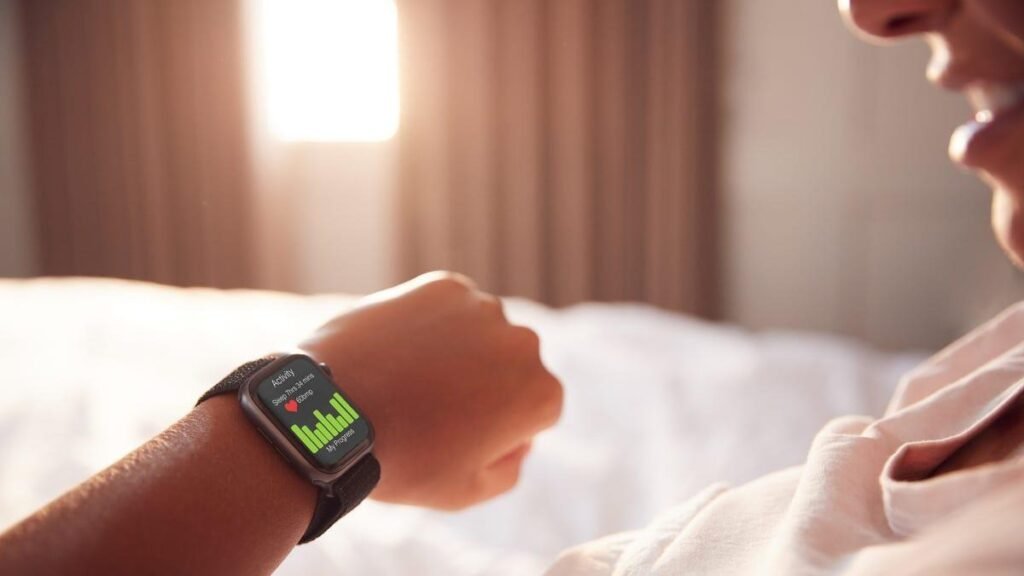
Spending eight hours in bed doesn’t always mean you slept for eight hours.
You may spend time trying to fall asleep, wake up during the night, or stay in bed after waking. That’s why sleep experts often look beyond total sleep time and measure sleep efficiency percentage instead.
A Sleep Efficiency Percentage Calculator helps determine how much of your time in bed was actually spent sleeping. It’s a simple metric that can help you monitor sleep habits, identify patterns, and work toward a more consistent sleep routine.
What Is a Sleep Efficiency Percentage Calculator?
Quick Answer
A Sleep Efficiency Percentage Calculator calculates the percentage of time you spend asleep compared with the total time you spend in bed.
The result helps estimate how efficiently you’re sleeping, rather than simply how long you’re lying in bed.
Sleep Efficiency Percentage Formula
The calculator uses this formula:
Sleep Efficiency (%) = (Total Sleep Time ÷ Total Time in Bed) × 100
Example
Suppose you:
- Go to bed at 10:00 PM
- Wake up at 6:00 AM
- Spend 8 hours in bed
- Sleep for 7 hours
Calculation:
(7 ÷ 8) × 100 = 87.5%
Your estimated sleep efficiency is 87.5%.
Sleep Efficiency Percentage Examples
| Time in Bed | Total Sleep | Sleep Efficiency |
| 8 hrs | 8 hrs | 100% |
| 8 hrs | 7.5 hrs | 93.8% |
| 8 hrs | 7 hrs | 87.5% |
| 8 hrs | 6.5 hrs | 81.3% |
| 8 hrs | 6 hrs | 75% |
These examples show how even small periods of wakefulness can affect your sleep efficiency percentage.
What Is a Good Sleep Efficiency Percentage?
Quick Answer
Many sleep professionals use the following general ranges:
| Sleep Efficiency | General Rating |
| 95–100% | Excellent |
| 90–94% | Very Good |
| 85–89% | Good |
| 80–84% | Fair |
| Below 80% | Lower Sleep Efficiency |
These values are intended as general guidelines and should not be considered a medical diagnosis.
Helpful Sleep Tools
If you’re working on improving your sleep routine, these tools complement each other well:
A Sleep Calculator helps estimate ideal bedtimes and wake-up times based on natural sleep cycles, while a Nap Calculator helps you schedule naps that fit into your daily routine.
Why Does Sleep Efficiency Percentage Matter?
Quick Answer
Your sleep efficiency percentage shows how effectively you’re sleeping during the time you spend in bed.
A higher percentage generally means:
- Less time awake
- Better sleep consistency
- More effective use of your sleep time
Monitoring this percentage over time helps you identify patterns and improve your bedtime routine.
What Can Lower Sleep Efficiency?
Several everyday habits may reduce your sleep efficiency percentage.
Examples include:
- Irregular bedtimes
- Long periods awake before falling asleep
- Frequent nighttime awakenings
- Late caffeine intake
- Evening screen use
- A noisy sleep environment
Making small adjustments may help improve your overall sleep routine.

How Can You Improve Sleep Efficiency Percentage?
Keep a Consistent Sleep Schedule
Going to bed and waking up at similar times each day helps regulate your body’s internal clock.
Create a Better Sleep Environment
Aim for:
- A cool room
- Comfortable bedding
- Minimal noise
- Limited light
Avoid Long Periods Awake in Bed
If you’re unable to fall asleep, following a consistent bedtime routine may help improve sleep efficiency over time.
Reduce Evening Screen Time
Limiting blue light before bed may make it easier to fall asleep.
Can Naps Affect Sleep Efficiency?
Yes.
Long naps late in the afternoon may affect nighttime sleep for some people.
A Nap Calculator can help estimate an appropriate nap length without interfering with your bedtime.
What About Jet Lag?
Travel across several time zones can temporarily reduce sleep efficiency.
A Jet Lag Calculator helps estimate adjustment time while your body gradually returns to its normal sleep schedule.
Frequently Asked Questions
What is a Sleep Efficiency Percentage Calculator?
It calculates the percentage of time you’re asleep compared with the total time you spend in bed.
How do I calculate sleep efficiency percentage?
Use this formula:
Sleep Efficiency (%) = Total Sleep Time ÷ Total Time in Bed × 100
Is 90% sleep efficiency considered good?
Many sleep specialists consider 90% or higher to be a very good level of sleep efficiency.
Can sleep efficiency improve?
Yes. Better sleep habits and a more consistent bedtime routine often help improve sleep efficiency over time.
Does spending more time in bed improve sleep efficiency?
Not always. Spending extra time awake in bed may actually lower your sleep efficiency percentage.
Conclusion
A Sleep Efficiency Percentage Calculator is a simple tool that helps you understand how effectively you’re sleeping each night. By measuring the percentage of time you spend asleep while in bed, you can identify patterns, improve your bedtime routine, and work toward healthier long-term sleep habits.
Combined with practical sleep planning tools and consistent daily routines, tracking your sleep efficiency percentage can help you make better decisions about your sleep schedule.