
Most people know they need enough sleep, but fewer understand the difference between sleep quantity and sleep quality.
You can sleep for eight hours and still wake up feeling exhausted. On the other hand, someone else may sleep slightly less and feel energized throughout the day.
The difference often comes down to sleep quality.
Sleep quality describes how well you sleep, not just how long you sleep. It reflects whether your sleep is restorative, uninterrupted, and capable of helping your body and brain recover properly.
Understanding sleep quality can help you identify sleep problems, improve daily performance, and support long-term health.
What Is Sleep Quality?
Quick Answer
Sleep quality refers to how restful, restorative, and uninterrupted your sleep is throughout the night.
Good sleep quality typically means:
- Falling asleep within a reasonable time
- Staying asleep most of the night
- Experiencing healthy sleep cycles
- Waking up feeling refreshed
- Maintaining good energy levels during the day
Sleep quality is often considered just as important as sleep duration.
Why Sleep Quality Matters

During sleep, your body performs critical recovery functions.
Quality sleep helps support:
- Memory consolidation
- Learning and concentration
- Immune system function
- Hormone regulation
- Muscle recovery
- Emotional well-being
Poor sleep quality can affect nearly every area of life.
Even a few nights of disrupted sleep may lead to:
- Fatigue
- Irritability
- Reduced productivity
- Difficulty concentrating
Long-term poor sleep may increase the risk of several health problems.
Sleep Quality vs Sleep Quantity
Many people assume sleeping longer automatically means sleeping better.
That’s not always true.
| Sleep Quantity | Sleep Quality |
| Measures hours slept | Measures how well you slept |
| Focuses on duration | Focuses on effectiveness |
| Easy to measure | More complex |
| Doesn’t guarantee recovery | Reflects overall restfulness |
For example:
Person A sleeps 9 hours but wakes up multiple times.
Person B sleeps 7.5 hours without interruptions.
Person B may experience significantly better sleep quality.
Signs of Good Sleep Quality
Quick Answer
Good sleep quality means you fall asleep easily, stay asleep most of the night, and wake feeling rested.
Common signs include:
- Falling asleep within 15–20 minutes
- Minimal nighttime awakenings
- Feeling refreshed in the morning
- Consistent daytime energy
- Good concentration and focus
- Stable mood throughout the day
These indicators often suggest healthy sleep patterns.
Signs of Poor Sleep Quality

Poor sleep quality can show up in different ways.
Common symptoms include:
- Frequent awakenings
- Difficulty falling asleep
- Daytime sleepiness
- Brain fog
- Irritability
- Low motivation
- Morning headaches
Many people focus on sleep duration while overlooking these important warning signs.
Factors That Affect Sleep Quality
Several factors influence how well you sleep.
Sleep Environment
A poor sleeping environment can reduce sleep quality.
Common issues include:
- Excessive noise
- Bright lights
- Uncomfortable mattress
- Room temperature problems
Stress and Anxiety
Mental stress often interferes with both falling asleep and staying asleep.
Screen Exposure Before Bed
Phones, tablets, and computers emit blue light that may delay melatonin production.
Irregular Sleep Schedule
Constantly changing bedtimes can disrupt your body’s internal clock.
Caffeine and Alcohol
Both can negatively affect sleep quality when consumed close to bedtime.
Medical Conditions
Sleep quality may also be affected by:
- Sleep apnea
- Chronic pain
- Restless legs syndrome
- Depression
- Anxiety disorders
What Happens During Healthy Sleep?
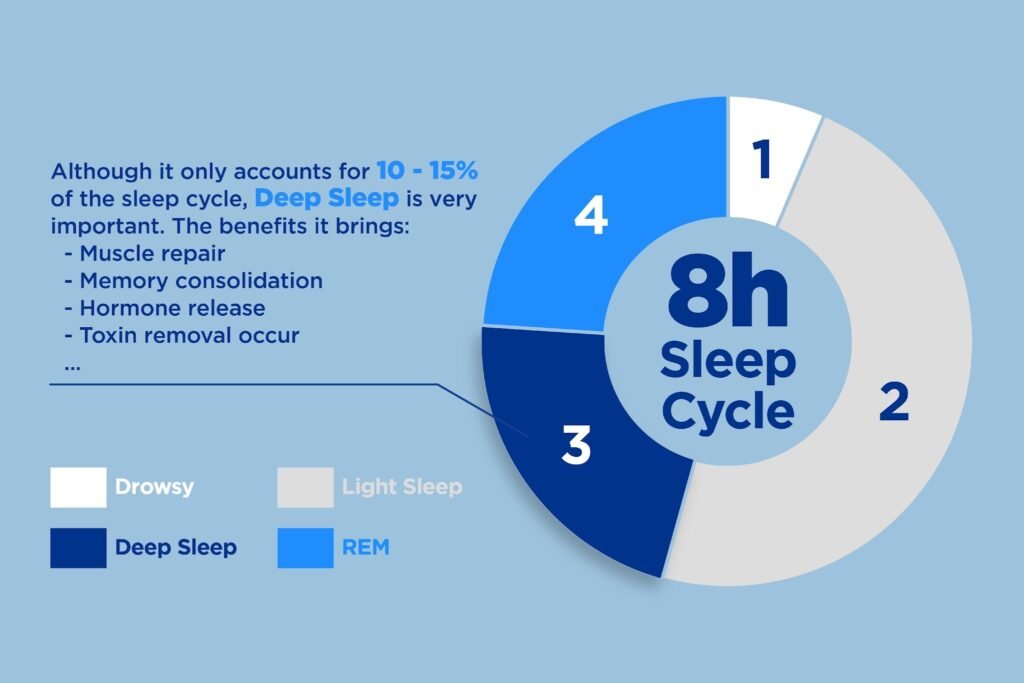
Sleep occurs in several stages.
A normal sleep cycle includes:
Stage 1 Sleep
Light sleep that occurs shortly after falling asleep.
Stage 2 Sleep
The body begins slowing down and preparing for deeper sleep.
Stage 3 Sleep
Deep sleep is essential for physical recovery and immune function.
REM Sleep
Rapid Eye Movement (REM) sleep plays a major role in learning, memory, and emotional processing.
Healthy sleep involves cycling through these stages multiple times throughout the night.
How Is Sleep Quality Measured?
Sleep quality can be evaluated using several methods.
Sleep Questionnaires
Researchers commonly use standardized sleep assessments.
Examples include:
- Pittsburgh Sleep Quality Index (PSQI)
- Sleep Quality Scale (SQS)
Sleep Trackers
Modern wearable devices estimate:
- Sleep duration
- Sleep stages
- Sleep efficiency
- Nighttime awakenings
Sleep Studies
Professional sleep studies provide the most detailed assessment of sleep quality.
How to Improve Sleep Quality
Maintain Consistent Bedtimes
Going to bed at the same time each night helps regulate your circadian rhythm.
Create a Sleep-Friendly Bedroom
Aim for:
- Cool temperatures
- Minimal noise
- Complete darkness
- Comfortable bedding
Limit Screen Time Before Bed
Try avoiding screens for at least one hour before sleep.
Stay Physically Active
Regular exercise can improve sleep quality and sleep efficiency.
Manage Stress
Helpful techniques include:
- Meditation
- Deep breathing
- Journaling
- Relaxation exercises
Use Sleep Timing Tools
Online tools can help optimize sleep schedules.
Useful resources include:
- Sleep Calculator
- Sleep Cycle Calculator
- Nap Calculator
- Jet Lag Calculator
Sleep Quality and Sleep Efficiency
Although related, these metrics measure different aspects of sleep.
| Sleep Quality | Sleep Efficiency |
| Measures restfulness | Measures time asleep |
| Subjective and objective factors | Mathematical calculation |
| Focuses on overall recovery | Focuses on sleep percentage |
A person can have good sleep efficiency but poor sleep quality if sleep stages are disrupted.
When Should You Seek Professional Help?
You should consider professional evaluation if:
- Sleep problems persist for several weeks
- Daytime fatigue affects daily activities
- You snore heavily
- You frequently wake up gasping for air
- Sleep quality continues to decline
Early intervention may help identify underlying sleep disorders.
Frequently Asked Questions
What is sleep quality?
Sleep quality refers to how restful, restorative, and uninterrupted your sleep is.
Why is sleep quality important?
Good sleep quality supports brain function, physical recovery, mood regulation, and overall health.
Can you have enough sleep but poor sleep quality?
Yes. Sleeping for many hours does not guarantee restorative sleep.
How can I improve sleep quality naturally?
Maintain a regular sleep schedule, improve your sleep environment, limit screen time, and manage stress.
What affects sleep quality the most?
Common factors include stress, sleep habits, bedroom environment, caffeine use, and underlying health conditions.
Conclusion
Sleep quality is about much more than the number of hours you spend in bed. High-quality sleep helps your body recover, supports brain function, improves mood, and contributes to overall health.
By understanding the factors that influence sleep quality and making small improvements to your sleep habits, you can enjoy more restorative sleep and better daytime performance.