
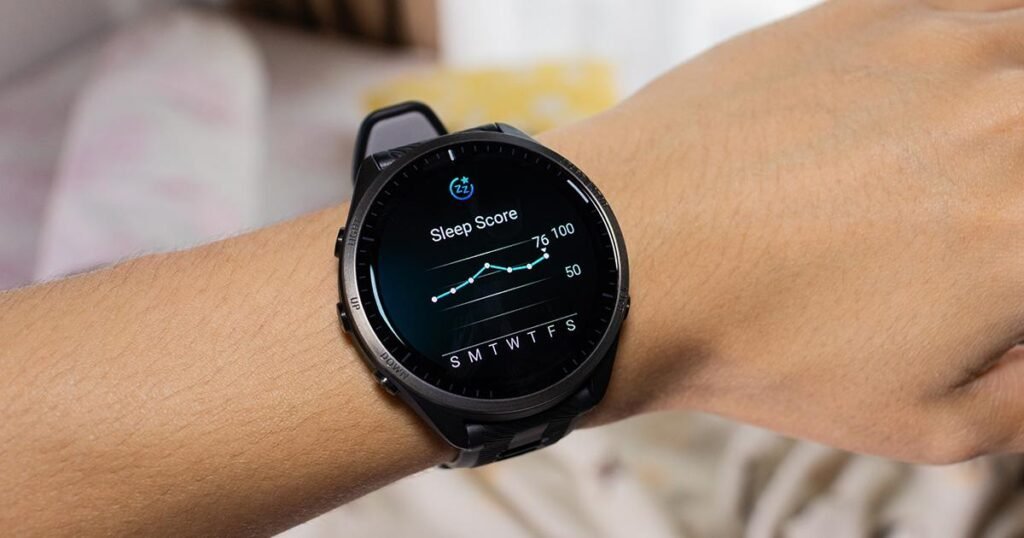
Many people believe getting enough hours in bed automatically means they are getting quality sleep. However, there is a difference between the time you spend lying in bed and the time you are actually asleep. This difference is explained by the concept of sleep efficiency.
To define sleep efficiency simply, it is the percentage of time a person spends asleep compared with the total amount of time they spend in bed. It is one of the most commonly used measurements in sleep medicine to assess how effectively someone sleeps.
This guide explains the meaning of sleep efficiency, its formula, ideal score ranges, factors that affect it, and practical ways to improve it.
Define Sleep Efficiency
Quick Answer
Sleep efficiency is the percentage of your total time in bed that you actually spend sleeping.
It evaluates how effectively your body converts time in bed into real sleep.
For example, if you remain in bed for 8 hours but sleep for 7 hours, your sleep efficiency is:
(7 ÷ 8) × 100 = 87.5%
A higher percentage usually indicates better sleep continuity and fewer periods of wakefulness during the night.
Why Sleep Efficiency Matters
Sleep efficiency provides a deeper understanding of sleep health than total sleep duration alone.
Consider two individuals:
| Person | Time in Bed | Time Asleep | Sleep Efficiency |
|---|---|---|---|
| Person A | 8 hours | 7.5 hours | 93.8% |
| Person B | 8 hours | 5.5 hours | 68.8% |
Although both people spent eight hours in bed, Person A experienced more efficient and uninterrupted sleep.
Higher sleep efficiency is often associated with:
- Better daytime alertness
- Improved concentration and memory
- More stable mood
- Less daytime tiredness
- Better overall sleep satisfaction
How Sleep Efficiency Is Calculated
Quick Answer
Sleep efficiency is calculated by dividing the total time spent asleep by the total time spent in bed and multiplying the result by 100.
Sleep Efficiency Formula
Sleep Efficiency (%) = (Total Sleep Time ÷ Total Time in Bed) × 100
Example Calculation
A person goes to bed at 10:30 PM and gets out of bed at 6:30 AM.
- Total time in bed: 8 hours
- Time awake during the night: 45 minutes
- Actual sleep time: 7 hours 15 minutes
Calculation:
7.25 ÷ 8 × 100 = 90.6%
This is considered a healthy sleep efficiency score.
A Sleep Efficiency Calculator can perform this calculation automatically using your sleep data.
Sleep Efficiency Score Chart
The following ranges are commonly used to interpret sleep efficiency percentages.
| Sleep Efficiency Percentage | Meaning |
|---|---|
| 95% or higher | Excellent sleep efficiency |
| 85%–94% | Good or healthy sleep efficiency |
| 75%–84% | Fair sleep efficiency; improvements may help |
| Below 75% | Low sleep efficiency that may require attention |
Your score may vary depending on age, lifestyle, stress, health conditions, and sleep habits.
What Is a Good Sleep Efficiency?
Quick Answer
For most adults, a sleep efficiency score of 85% or higher is generally considered healthy.
People with good sleep efficiency typically:
- Fall asleep within a reasonable amount of time
- Experience fewer nighttime awakenings
- Return to sleep quickly after waking
- Wake feeling refreshed
A consistently low score may indicate poor sleep habits or an underlying sleep issue.
Causes of Low Sleep Efficiency
Several factors can reduce how efficiently you sleep.
Lifestyle Factors
- Irregular sleep schedules
- Caffeine consumption late in the day
- Alcohol before bedtime
- Stress and anxiety
- Excessive screen exposure at night
Environmental Factors
Your sleeping environment can also affect your score.
Common problems include:
- Bright lights
- Loud noises
- Uncomfortable mattresses or pillows
- A room that is too hot or too cold
Medical Causes
Low sleep efficiency may be associated with:
- Insomnia
- Sleep apnea
- Chronic pain
- Anxiety or depression
- Certain medications
If you frequently wake up tired despite spending enough time in bed, seeking medical advice may be helpful.
Ways to Improve Sleep Efficiency
1. Maintain a Consistent Sleep Schedule
Going to sleep and waking up at the same time every day helps support a healthy circadian rhythm.
2. Improve Your Sleep Environment
Create a better bedroom by:
- Keeping the room dark and quiet
- Maintaining a comfortable cool temperature
- Using supportive bedding
3. Avoid Sleep Disruptors
Reduce or avoid:
- Caffeine late in the day
- Heavy meals before bedtime
- Bright screens close to sleep
4. Manage Stress Before Bed
Relaxing activities may improve your ability to fall asleep, such as:
- Reading
- Meditation
- Deep breathing
- Gentle stretching
5. Track Your Overall Sleep Health
Sleep efficiency is only one part of healthy sleep. Also monitor:
- Total sleep hours
- Sleep debt
- Sleep cycles
- Sleep consistency
Useful tools include a Sleep Efficiency Calculator, Sleep Debt Calculator, Sleep Calculator, and Nap Calculator
Sleep Efficiency vs Sleep Quality
These two terms are related but not the same.
| Sleep Efficiency | Sleep Quality |
|---|---|
| Measures the percentage of time asleep while in bed | Measures how refreshing and restorative sleep feels |
| Uses a mathematical calculation | Includes factors like deep sleep, REM sleep, and comfort |
| Focuses on sleep continuity | Focuses on overall sleep experience |
Someone can have excellent sleep efficiency but still experience poor sleep quality due to other health or lifestyle factors.
Expert Tip: Evaluate Your Weekly Sleep Patterns
One low sleep efficiency score does not necessarily mean you have a sleep problem. Monitoring your sleep over several weeks provides a more reliable picture of your sleep health.
A sleep diary or wearable tracker can help identify patterns that reduce sleep efficiency.
Frequently Asked Questions
What is the simple definition of sleep efficiency?
Sleep efficiency is the percentage of time you spend sleeping while you are in bed.
What is considered good sleep efficiency?
Most adults generally have good sleep efficiency when their score is 85% or higher.
How do doctors calculate sleep efficiency?
Doctors calculate it by dividing total sleep time by total time in bed and multiplying by 100, often using sleep studies or sleep diaries.
Can sleep efficiency be improved?
Yes. A regular sleep schedule, a better sleep environment, and healthy bedtime habits can improve sleep efficiency.
Is sleep efficiency the same as sleep quality?
No. Sleep efficiency measures the amount of time spent asleep in bed, while sleep quality includes how restorative and satisfying the sleep feels.
Conclusion
To define sleep efficiency, it is simply a measurement of how much of your time in bed is spent sleeping. It is an important indicator of sleep continuity and overall sleep health.
A sleep efficiency score of 85% or higher is generally considered healthy. By improving your sleep routine, managing factors that disrupt sleep, and using tools such as a Sleep Efficiency Calculator, Sleep Debt Calculator, and Sleep Calculator, you can gain a better understanding of your sleep patterns and work toward more restorative rest.

Pingback: Sleep Efficiency Definition: Meaning, Formula & Why It Matters -
Pingback: Sleep Efficiency Calculator: Calculate Your Sleep Quality Score -