Introduction
While artificial intelligence continues to permeate every sector, the most important challenge is the governance of such technology. What can communities do to ensure that AI models remain transparent, ethical, and accountable in the absence of centralized governance? Quack AI Governance presents an interesting solution to this problem: It is the first governance model to use blockchain technology to let communities manage AI through decentralization, collective intelligence, and token voting systems.
This new governance model will extend to all the disparate constituents involved in the different stages of intelligent automation, including development, value creation, and algorithm innovation, and will empower neural network creators, data providers, and token holders with algorithmic governance. Quack AI Governance promotes algorithmic democracy and intelligent automation decentralization. Its technology, tokenomics and value proposition to DAOs. This will highlight Quack AI Governance’s position in the evolving Web3 landscape through a competitive analysis of AI governance solutions.
What is Quack AI Governance?
Quack AI Governance is the first decentralized AI system that combines accountability, governance, and community value and participation. It is the first system that uses AI model management through blockchain technology to ensure that all AI development and deployment decisions are open, transparent, and democratic.
Unlike traditional AI systems that are run by a centralized agency or a private corporation, Quack AI allows a dispersed community to collaboratively decide how to train, fine-tune, and apply models in decentralized apps (dApps).
Core Vision of Quack AI
As a primary mission, the Quack AI Governance Project is to decentralize AI governance and sequentially to enforce ethical, equitable, and community-centric governance models. It is to be aligned around open, auditable, and reliable Artificial Intelligence by coupling developers, data owners, and token holders.
Basically, Quack AI shifts the governance of AI to a DAO-enabled ecosystem where any user, through the native token, can propose, vote on, and implement governance actions.
How Quack AI Works
The governance of Quack AI combines smart contracts, tokenized voting, and community validation. Quack AI governance operates along the following lines.
1. Governance by Tokenization
Quack AI has designed a self-contained ecosystem around the AIQ token. AIQ is both the utility token and governance token wrapped around the First Order Governance AIQ. Token holders can propose system improvements, vote on policy changes, allocate resources, and direct the AI models to be integrated into the ecosystem.
In a trustless agreement where no one party can dictate or obstruct a deal without the others consent. Decentralized AI model collaboration
Quack AI takes a novel approach to model training in its ecosystem; different users contribute different data sets to collaboratively train a model. Quack ecosystem also preserves the training processes and result trustlessly verifiably on the block chain ensuring reproducibility and accountability in the training process
Smart contract design ensures that manipulative governance is impossible. Governance is completely trustless automated via smart contracts ensuring that no player can bend or break the rules on the governance process
AIG DAO coordinates trigger governance actions ensuring there is no bottleneck in the ecosystem. Equilibrium is maintained between security and innovation. Participating in the ecosystem is self-sustaining in nature. Data governance and model validation all earn participants rewards. This is only the start; there is a massive aspect of long term self-sustaining engagement
Quack AI The first self governing AI in blockchain technology
All governance actions are on-chain verifiably through the system. As a result, trust is built in decisions made, as every action can be traced AI model governance and self adjustments are community driven. This is a paradigm shift as innovation is obtained through collective contractual governance and user driven demand
Decentralized validators ensure each of AI model outputs is verified proof of accurate output and determination of ethical compliance.
Decentralized AI Model Training
AI models within the Quack ecosystem are collaboratively trained as different users contribute different data training sets. For reproducibility and accountability, Quack ecosystem also preserves the training process trustless verifiably on the block chain.
Smart contract design ensures that manipulative governance is impossible. Governance is completely trustless automated via smart contracts ensuring that no player can bend or break the rules on the governance process
AIG DAO coordinates trigger governance actions ensuring there is no bottleneck in the ecosystem. Equilibrium is maintained between security and innovation
Participating in the ecosystem is self-sustaining in nature. Data governance and model validation all earn participants rewards. This is only the start; there is a massive aspect of long term self-sustaining engagement
Quack AI The first self governing AI in blockchain technology
All governance actions are on-chain verifiably through the system. As a result, trust is built in decisions made, as every action can be traced
AI model governance and self adjustments are community driven. This is a paradigm shift as innovation is obtained through collective contractual governance and user driven demand
Decentralized validators ensure each of AI model outputs is verified proof of accurate output and determination of ethical compliance.
4. Cross-Chain Functionality
Quack AI has the capacity to deploy cross-chain functionalities, which promotes the scalability of the system and the seamless translation of interoperability across disparate blockchain networks.
5. AI Ethics Framework
Ethical standards and consensus evaluations are intrinsic to the system, preventing the deployment of biased and unsafe AI models.
Tokenomics of Quack AI (AIQ Token)
| Parameter | Details |
|---|---|
| Token Name | Quack AI Governance Token (AIQ) |
| Utility | Governance, staking, reward distribution |
| Total Supply | 1 billion AIQ (fixed cap) |
| Distribution | 40% community rewards, 25% development, 20% DAO treasury, 10% strategic partners, 5% reserve |
| Consensus Mechanism | Proof-of-Stake (PoS) |
| Governance Role | Propose, vote, and execute governance actions |
AIQ holders play a crucial role in maintaining network stability, governance integrity, and decentralized autonomy.
Applications and Use Cases
1. DAO Governance
Quack AI incorporates decision-support systems for DAOs, which helps to automate and optimize their governance frameworks using AI and data-driven insights.
2. Ethical AI
Quack AI decentralizes oversight to ensure that the ethical application of the technology is universally and collaboratively supervised.
3. Web3 Development
Quack AI enables developers to implement their governance frameworks within dApps to facilitate AI-driven automation of governance and community participation.
4. AI Data Marketplaces
Quack AI promotes responsible data practices through tokenized incentives that allow data owners to retain privacy and control over their data, monetizing contributions to data sets.
5. Research Collaboration
In an open and decentralized ecosystem, researchers and developers can collaboratively build and refine AI models.
Advantages of Quack AI Governance
1. Transparency: All governance actions are logged on the blockchain.
2. Community Control: Users and stakeholders democratically influence the direction of AI.
3. Ethical Safeguards: Intrinsic compliance meshwork protects AI from being abused.
4. Cross-Chain Operability: Functionality across a variety of blockchains.
5. Reward Mechanisms: Active participation is encouraged through distributed incentives.
Challenges and Limitations
Difficulty in Achieving Consensus: Coming to a collective agreement can take a long time when participants are varied.
Problems with Scalability: On-chain AI training at scale may run into performance limitations.
Barriers to Early Adoption: Non-technical users will require education and onboarding, training, and documentation.
Unclear Regulations: The governance of decentralized AI technologies has no clear and defined legal structures.
The Future of Decentralized AI Governance
With growing interest in AI systems and the oversight frameworks that govern them, Quack AI Governance has established itself as a frontrunner in the provision of trustless and democratically governed AI systems. The intersection of innovative AI technologies and blockchain will reshape the community-ML model interactions.
With future releases, Quack AI will focus on automated governance, AI auditing, and integration with top Layer-2 networks.
Top 5 Alternatives to Quack AI Governance
While Quack Ai Governance expands its influence, other platforms are also exploring the integration of decentralized AI management. Here are five other options to consider.
1. Fetch.ai
Overview
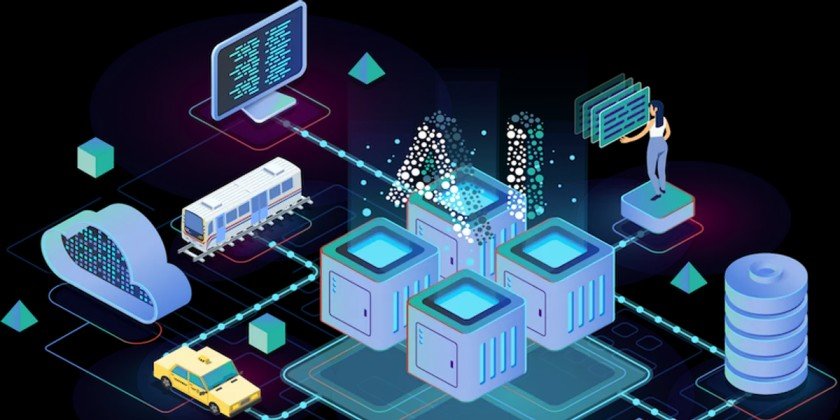
Fetch.ai is a decentralized AI network for connecting devices and algorithms via autonomous economic agents (AEAs). It enables machine learning models to execute tasks without the need for centralized third parties.
Key Features
- Self-governing AI agents for making decisions
- Data and computed resources sold in a decentralized marketplace
- Combination of IoT and Web3 applications
- Cosmos SDK for improving scalability
Pros
- Actively developed ecosystems
- Interoperability work as a main focus
- Real-world logistics and mobility AI implementations
Cons
- Beginners face an intricate design
- Volatility of token limits engagement
Pricing
- You must stake FET tokens to access the Fetch.ai platform, which has no fixed monthly subscription. Your costs will incur based on the amount of transactions and computational resources used.
2. SingularityNET
Overview
SingularityNET is an open marketplace for AI services, enabling developers to publish, share, and monetize AI models. It promotes interoperability and collective governance for AI systems.
Key Features
- AI-as-a-Service marketplace
- Governance via the AGIX token
- Multichain support (Ethereum and Cardano)
- Integration with AI model repositories
Pros
- Extensive AI service library
- Transparent governance through DAO
- Backed by strong AI research teams
Cons
- Competition from centralized AI providers
- Requires technical expertise to deploy services
Pricing
- The transactions developers and users perform using AGIX tokens are priced dynamically according to the complexity of the service requested.
3. Ocean Protocol
Overview
Ocean Protocol enables secure sharing and monetization of data for AI and analytics, promoting open access while preserving data privacy.
Key Features
- Decentralized Data Marketplaces
- On-chain Data Tokenization
- Privacy-Preserving Compute-To-Data Technology
- Cross-Chain Integration
Pros
- Data Ownership and Privacy
- Enterprise-Wide Adoption
- Pricing Models
Cons
- Difficult Tokenomics
- Small Developers Have Integration Issues
Pricing
- Data providers set prices and users pay in OCEAN tokens for access or computation.
4. Cortex DAO
Overview
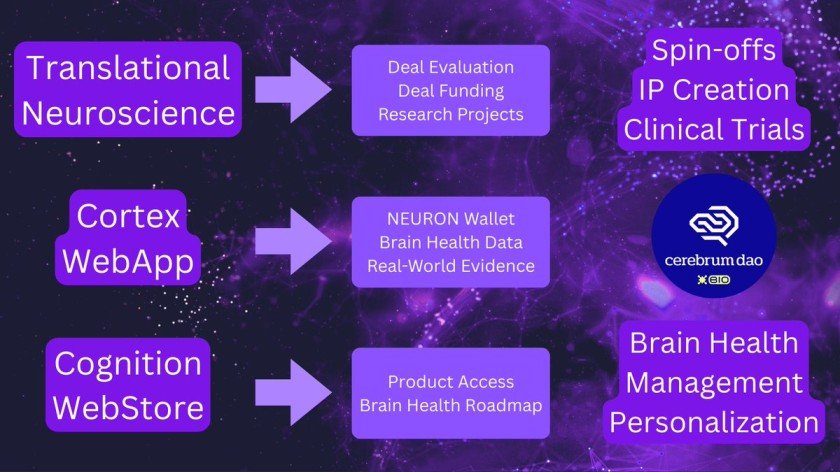
Cortex DAO combines blockchain technology with artificial intelligence and allows for smart contracts to execute AI models directly on-chain to create intelligent decentralized applications.
Key Features
- On-Chain Execution of AI Models
- CORTX Token Governance
- AI Inference Integrated into Smart Contracts
- Decentralized Model Repository
Pros
- Real-Time AI Inference
- Strong Technical Innovation
- Ecosystem Friendly for Developers
Cons
- Limited Adoption Out of Research
- High Computational Requirements
Pricing
- Cortex AI models use CORTX tokens for governance participation and execution fees. There is also no subscription model.
5. Numerai

Overview
A decentralized network of data scientists submits machine learning models to predict financial markets for Numerai, a hedge fund.
Key Features
- Predictions powered by AI developed through community collaboration
- NMR staking in exchange for submitting models
- Reward system and leaderboard designed without bias
- The ability to track the data in the long-term
Pros
- The use case demonstrates proof and use in the financial world
- Aligned eco-system in the form of incentives
- Rewards that are distributed are fair and based on the merits
Cons
- The application of it is restricted to finances
- The participation model is based on competition
Pricing
- NMR tokens are needed to be staked to participate and there are no direct platform usage fees.
FAQs
1. Why is Quack AI different from other AI governance tools?
The Quack AI system is the only one that decentralizes governance and allows for community real-time oversight in the training of AI.
2. In what way does Quack AI maintain professionalism and impartiality?
The blockchain is used to document every proposal and vote and every other model decisions for accountability.
3. Can Quack AI be used in other applications?
Quack AI includes APIs and SDKs that are designed for incorporating governance into dApps.
4. What is the purpose of the AIQ Token?
The AIQ token is for governance and is used to stake and reward individuals who assist in data improvement and AI performance.
5. Is Quack AI a DAO?
Quack AI functions as a DAO whereby community participants implement platform governance in a distributed manner.
Conclusion
Quack AI Governance is a new frontier for decentralized AI. It combines the transparency of blockchain technology with the decision-making power of AI. Having communities participate in governance makes Quack AI a trustless system where fairness, ethics, and innovation can thrive together. As the governance of decentralized AI systems matures, so will Quack AI and its contemporaries: Fetch.ai, SingularityNET, Ocean Protocol, Cortex DAO, and Numerai. These systems will define the parameters of AI’s social contract. The potential of distributed Quack AI governance is the absence of a central point of control. Quack AI is leading the charge.