Introduction
There has been a surge of complex cyberattacks across the world. Digital threats extend beyond corporate networks to individuals, public servants, and essential services. According to cyber security specialists and federal agencies, in the year 2025, individuals and organizations ought to adopt encrypted communication applications as their primary means of communication as a countermeasure.
Warnings are urgent. The world has come to the conclusion that SMS, regular phone calls, and other forms of communication through unprotected websites and messaging applications are inadequate for conveying sensitive information. Interception of communication, exploitation of vulnerabilities in telecom systems, and the use of advanced surveillance techniques have been employed by cyber criminals.
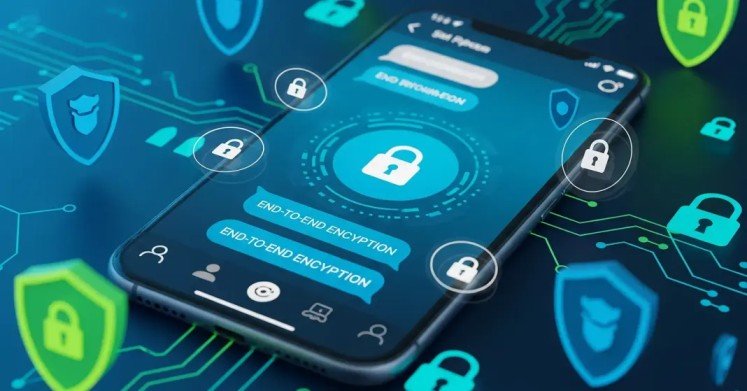
Why encrypted applications have become mandatory, how they function, the consequences of using unprotected communication, and effective ways to improve your digital privacy in the contemporary environment are the topics of this article.
Understanding the Modern cyberattack Landscape
Growing Complexity and Frequency of Cyberattacks
There has been a fundamental change in the nature of cyberattacks in the past decade. The modern cyberattack is heavily coordinated and resourceful as compared to the archaic, unsophisticated cyberattacks of a decade ago. These attacks are multi-dimensional in nature and deliberately engineered to exploit telecom networks, breach cloud services, compromise personal devices, and infiltrate systems of organizations.
Establishing the parameters
Recent developments regarding state-sponsored attacks have given rise to a new trend: attacks against nation-state cyber units which focus on telecommunication networks, cloud providers, and government entities. These attacks can be used to harvest intelligence, disrupt operational activities, or gain persistent access to target systems. Analysts report that no sector or area is immune, with the civilian populace being particularly vulnerable.
Telecom Network Vulnerabilities
Telecom infrastructure has recently been under attack and has been exploited to gain access to a voice call, text message, and other forms of real-time communications. Cybercriminal groups consider the telecom infrastructure to be a valuable target, particularly because the backbone of the telecom sector is largely comprised of systems which utilize outmoded technology.
Metadata Surveillance
Attackers may not even need to access the content of messages themselves, as information such as the identity of the messengers and their location can reveal sensitive information. Profiling, targeting, and tracking can be accomplished with metadata alone.
Phishing and Social Engineering
Attackers have gained the capacity to create sophisticated phishing and social engineering attacks by impersonating the target of the attack. This has been facilitated by the availability of unencrypted communications which leaves an attack surface to be exploited by cyberattackers.
What Are Encrypted Apps?
Encrypted apps allow their users to communicate through a platform that has been designed to use encryption techniques to shield messages, calls, files, and other forms of metadata from unauthorized access, or other forms of surveillance. The highest level of protection granted by these apps consists of end-to-end encryption (E2EE), which permits only the sender and the intended recipient to have the capacity to read or listen to the information being communicated.
End-to-End Encryption
End-to-End Encryption (E2EE) involves having the user’s data (information, messages, etc.) get encrypted on the sender’s device, and only get decrypted on the final receiver’s device, thus the data cannot be accessed or deciphered by intermediaries like servers or service providers during the sending and receiving processes.
E2EE is defined by the following features:
- Device-level Encryption: Encryption occurs before the user’s device transmits the data (information, messages, etc.)
- Message Key Ownership: Only the sender and receiver possess the digital keys needed to decrypt messages.
- Zero-Knowledge Architecture: Service providers are unable to read messages or know what has been sent.
- Secure Key Handshake: Every unique communication has unique keys used to encrypt the data already.
The outcome of these features speaks for itself: there will be immeasurable data, and thus information, that can be interpreted if there is an interception.
The Communication Precarity
A considerable number of people are dependent on the standard phone and messaging platforms, and mobile messaging and phone systems, while there are very small and limited protections that are able to be provided and highly exposed to the cyber security complexities of the current prevalent apps and interface systems.
1. No Encryption
An SMS sends data as plain text. Mobile Service Providers (MSPs) can, and do, monitor and/or intercept SMS mobile messages.
Vulnerabilities of SMS include, but are not limited to:
- Interception through SS7 flaws
- SIM swap attacks
- Cell spoofing
- Device Cloning
Because of the above factors and in combination with the lack of SMS encryption, SMS messaging cannot be used to send, transmit, or share sensitive, personal, professional, or financial information.
2. Standard Calls Are Vulnerable
Just like text messages, standard cellular voice calls are not immune to interception. Attackers can listen to voice data either by breaching telecommunications switches or by intercepting radio transmission streams.
3. Metadata Remains Exposed
Not only the content itself, but any communication metadata (like the time frame, phone numbers, the contacts, the location, and the frequency of messages) can also be exploited for various surveillances or for profiling, and these are data points that are not easily shielded.
4. Backup Vulnerabilities
Any application that makes unprotected backups (like keeping user messages in the cloud) poses privacy threats. Attackers who may have breached a cloud storage account may gain store chat logs at will.
Why Encrypted Apps Are Essential in 2025
1. They Block Interception at the Source
Especially if the voice communication can be intercepted by any of the telecom routes or if the voice communication at the suspected phone may be targeted. But this is not as big of a problem if the voice communication streaming is encrypted. If there is seamless end-to-end encryption (E2EE) for the voice data, then any subsequent interception may be rendered to be pointless.
2. Protection Against State-Sponsored Threats
Encrypted communication as a personal safety precaution from government surveillance is practical and advised across many countries over the world. This helps the user escape from, and stay protected within, a user-centric surveillance ecosystem.
3. Safeguarding Personal and Professional Privacy
Individuals are not the only ones encrypted applications protect.
They also protects:
- Healthcare records
- Financial information
- Legal communications
- Business strategies
- Confidential corporate information
For corporations and enterprises, encrypted professional messaging is a shield against industrial espionage.
4. Defense Against Social Engineering
Cryptographic technology makes it difficult for hackers to profile communications and pattern attacks on spear-phishing attacks.
5. Enhancing Security for Remote Work
The remote working paradigm relies on digital interaction, and these apps encrypt communications ensure that information within the company remains confidential while employees use public Wi-Fi access points.
Features that Make Encrypted Apps Secure
Security of these apps goes beyond E2EE; these apps have added features that bolster privacy to a greater degree.
Secure Features You Should Look For
1. Forward Secrecy
This protects past communications and makes sure that, even if one of the encryption keys should fall into the wrong hands.
2. Encrypted Backups
Users should be able to protect access to their locally stored or cloud backups of their apps.
3. Minimal Metadata Collection
The most secure apps intentionally collect no or very little metadata.
4. Two-Factor Authentication
2FA minimizes the chance of account compromise.
5. Device Verification
As a rule, encrypted apps will perform identity verification of their users for linked devices.
6. Self-Destructing Messages
Disappearing messages or temporary messages will result in lower exposure of the data.
7. Open-Source Cryptography
These systems prevent the possibility of hidden flaws by confidential construction of the system.
Risks of Not Using Encrypted Apps
1. Identity Theft
Messages that are left unencrypted can include sensitive information, including usernames and passwords, financial and personal data.
2. Unauthorized Surveillance
Attackers or malicious actors may observe your communications and movement patterns.
3. Account Takeover Synonymous with Loss
Authentication codes sent via SMS can be intercepted and accounts can be taken over.
4. Economic Harm
Attackers can utilize communications to fraudulently obtain banking information or find bank accounts and impersonate victims.
5. Espionage
Entities are exposed by their own succession and confidentiality that can aid their opponent.
Best practices for utilizing encrypted applications
Having an encrypted application alone will not suffice. Responsible conduct on the part of users is necessary.
1. Employ Encrypted Applications for All Confidential Communications
Even a trivial conversation may contain information of significance.
2. Disable Unauthorized Unencrypted Backups
If your encrypted application has a remote backup feature, ensure the backup is encrypted.
3. Maintain Applications and Devices with Current Versions
Updates frequently contain important security enhancements.
4. Refrain from SMS-Based Two-Factor Authentication
More secure use of app or hardware authenticators.
5. Verifying Keys of Identity
Some applications like Signal let users confirm and validate safety numbers to avert man-in-the-middle attempts.
6. Constained Permissions for Applications
Make sure applications are not given more access than is required.
7. Devices Should Be Locked Using Secure Approaches
Use biometrics or strong passwords for device-level security.
How to Choose the Right Encrypted App
In determining the right encrypted messaging app, think about the following:
- If the app provides end-to-end encryption automatically
- What the app’s data collection procedures are
- How the app keeps and manages backups
- What the app’s identity verification and device link traits are
- If the app offers safe calling, group messaging, or transfering files
- If the app’s data and underlying programming structure can be reviewed by the public
Frequently Asked Questions
1. How secure are encrypted apps?
While there is a high degree of safety from possible compromise of the communication, there are no guarantees. It truly relies on the end users engagement in safe cyber practices to keep their device secure.
2. Can encrypted apps protect me from all cyberattacks?
While encrypted communication cannot provide protection from device hacks, or social engineering, all other cyber communication claims can be protected.
3. Are encrypted apps legal?
Most countries provide legal access to apps. However, certain countries do have legal limits on the use of encrypted messaging.
4. What is the difference between encryption and end-to-end encryption?
There is a difference between encryption and end to end encryption because normal encryption can secure data, but It is end-to-end encryption when only the sender and the recipient are the only people able to access the decryption key.
5. Can someone decrypt my encrypted messages if they hack the app provider?
No because service providers cannot view messages. Their servers can be hacked but messages remain intact because service providers can only access the encryption key.
6. Should businesses adopt encrypted messaging platforms?
The answer is a resounding yes. Encrypted applications are a shield against losing sensitive information, business documents, personal info, trade secrets, and any essential in-house dialogues.
Conclusion
As we head into 2025, a new framework and approach to communicating are needed—both personally and in business. Legacy communication means like SMS and mobile telephone voice calls are no longer appropriate to use when sensitive information is in play. The growth in the variety and sophistication of adversative cyber activity means we must use tools that actively work to protect our privacy and security. Purpose-built encrypted messaging applications answer this deficit.
Not all custom applications are equal, and not all are intentionally built to protect their users from adversarial cyber activity. To overcome this shortcoming, these platforms should adopt and incorporate user-control, end-to-end encryption, reliable offline storage and backup, data minimization, anonymous user interfaces, and unobtrusive authentication methods. Personal encrypted messaging applications are now a required tool for long-term digitally safer work and personal environments. So are the applications organizations must adopt to ensure the mostly-confidential, and sometimes sensitive, work documents and communications of the business must protect.