
Introduction
ExtraTorrent was one of the largest and most influential torrent indexing sites in the world. At the index’s peak, it was one of the top ranked torrent sites , and it provided millions of users with magnet links and a peer-to-peer download system for a multitude of torrent files, both user-generated and sourced from other torrent sites, and with a big user community. It was top ranked for both the easy-to-navigate interface and for the the big assortment of open-source software, and other digital content that, although pirated, was legally shared over the internet under liberal licenses.
However, ExtraTorrent’s successive developments and growth from 2006-2017 also coincided with numerous industry complications such as copyright disputes, government crackdowns and security threats that threatened the torrenting industry. Extra torrent’s eventual, and, abrupt shut down left countless users with no clarifying information as to what had happened, a means to safely navigate the internet, and a way to legally consume a myriad of available content.
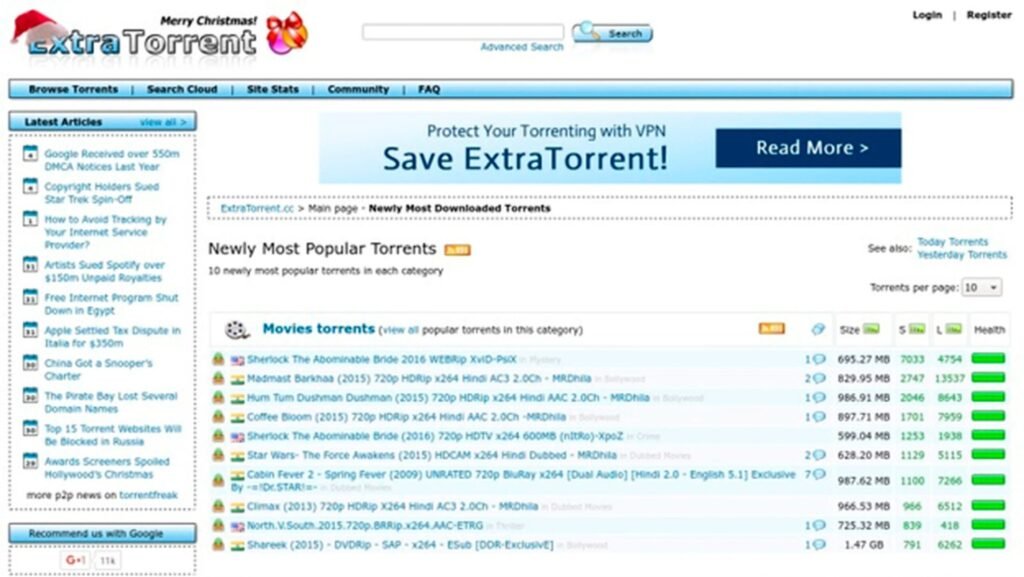
This comprehensive guide will detail ExtraTorrent’s history, what contributed to the eventual closure of the site, what risks exist for users of ExtraTorrent copies, the current legal state of torrenting, and what continues to be the most pressing issue, online security. ExtraTorrent also gets to the heart of the most important question and provides redundant accounts of legal alternatives to torrenting. Finally, this guide also provides a first rate article meeting the modern standards of SEO content for the particular subject of the guide, while also meeting the modern standards of user responsibility and overall complexity of the web.
An Analysis of ExtraTorrent and the Phenomenon of Global Torrenting
The Beginning
In the peer-to-peer file sharing industry of the early Internet-era of the 2000s, ExtraTorrent’s 2006 entry provided users with a revolutionary platform of magnet-link torrents and access to a growing community of engaged users and forum-goers. Within the first few years, ExtraTorrent enjoyed a top 5 ranking in global torrents. What made ExtraTorrent stand out, especially in its early days, was:
- An easy to use, simple interface
- Magnet links pinned to the top of the forum in real-time
- An engaged and moderated forum community
- Search options and categories that were consistently updated and highly organized
Why ExtraTorrent Became a Torrenting Phenomenon
1. Positive Community Contribution
The community operated in a feedback and response system, with users not only uploading, but also validating and maintaining torrents to enhance the overall experience of uploading content.
2. Association with Renowned Launching Outside Groups
ETTV, one of the industry’s most popular content-uploading and releasing groups, and others like ETRG, rapidly expanded ExtraTorrent’s visibility and reputation.
3. Sought Simplicity and Seamlessness
Users appreciated and enjoyed the clean and simple layout and the absence of clutter, quick access to available categories, and the ease of filtering search results.
4. Community Driven and Support of Multiple Languages
ExtraTorrent was able to attract, and maintain, a huge international audience, largely due to its diverse language offerings and community participation.
The Downfall: Why ExtraTorrent Shut Down
ExtraTorrent did not gradually take its leave. It imploded. The service ended on May 17, 2017, when the ExtraTorrent website put up its last post, indicating that it was shutting its doors indefinitely. The shutdown was final, and it was unfortunate, surprising, and shocking.
The Primary Drivers of the Shutdown
1. Amplifying Pressure from the Law
The torrenting industry started to feel the pressure from all legal corners. Copyright enforcement, media companies, and governments began implementing more aggressive policies to stop piracy. ExtraTorrent had experienced:
- Domain seizures
- ISP blocks
- Takedown orders
- New scrutiny from anti-piracy watchdogs
The legal pressure made the future of the operation untenable.
2. Self-Imposed Shutdown of the Admins
Rather than having their operation taken from them, the ExtraTorrent team stated that the implosion was voluntary. They even gave an order to users to stay away from clone/imitative torrents.
3. Security Issues and Difficulty of Sustained Attacks
Torrent platforms have to contend with:
- DDoS attacks
- Malware injections
- Link manipulations
- Traffic hijacking
These attacks on torrent sites, especially from large organized syndicates, are probably one of the operational difficulties the team faced.
What Followed ExtraTorrent’s Closure?
Even with the closure of ExtraTorrent, there was still high user demand caused by:
- Imposter sites
- Malicious replicas
- Proxy or mirror sites claiming affiliation
- Copycat branding
- Fakes claiming to be “revived”
However, none of these were authenticated by the former administrators of ExtraTorrent.
The Dangers of Post Closure Clone Websites
1. Security Issues
Many of these copycat sites were reported to take part in:
- Distribution of malware
- Hijacking browsers
- Inserting cryptocurrency mining scripts
- Malicious advertising
- Fake buttons to download
2. No Authentication and Community Supervision
Unlike the original ExtraTorrent, which was supported by an enormous and active moderation team, clone sites did not provide user reviews, reliable releases, or verification systems.
3. Legal and Moral Issues
The use or promotion of unverified torrent mirrors can:
- Anticipate copyright lawsuits to the user
- Support dangerous ecosystems
- Promote unethical online practices
- Compromise the users’ personal information
4. No Clarity
Administrators of the site repeatedly attempted to clarify:
There was no returning of ExtraTorrent post closure. Any site claiming to be “official” is untrue.
The Necessity to be Careful Regarding Torrent Mirrors and Proxy Users
1. Security Risks
Imposter domains often include:
- Malicious scripts
- Untrusted executables
- Drive-by downloads
- Fraudulent advertising networks
All of which can put personal information and devices at risk.
2. Risks Involved
The usage of P2P proxies and torrents opens the possibility of exposing your IP address to unknown parties, tracking services, and even attackers.
3. Consequences of the Law
While torrenting is not illegal, the concern arises when torrents being downloaded/seeded contain copyrighted materials and is being distributed without permission. The laws on this issue vary by country, and the consequences can include:
- Warnings from ISPs
- Throttling of your internet access
- Notices and fines
- Civil and/or Criminal prosecution
4. Data Collection From Fake Websites
Some imitation domain names can be very close to popular services and these may log:
- IP Logging
- Fingerprinting Browsers
- Tracking Clicks
- Tracking Form Submissions
These can be used for:
- Fraudulent Advertising
- Profiling Individuals
- Reselling Data
Explaining the Ecosystem for Torrents as Background
The TPT technology, or torrents technology, needs some background explanation for the complete picture on how torrent ecosystems function.
The Process of Operation of BitTorrent
A decentralised peer-to-peer protocol (P2P), BitTorrent allows users (peers) to transfer certain bytes of a file to one another. Important terms include:
- Peers: Participants in a file transfer.
- Seeds: Users who have the entire file and continue to transfer.
- Leechers: Users who are still in the process of downloading the file.
- Trackers: Servers that manage peer coordination (though many new torrents use distributed trackers).
- Magnet Links: Torrent metadata can be identified via URL.
The Importance of Torrent Index Websites
Torrent index sites do not have infringing files on their servers. These sites simply collate metadata (magnet links and/or .torrent files) uploaded and created by users. However, in many regions of the world, legal systems have recognized indexing as a means of facilitation.
The Legal Side of Things
Understanding the Legality of Torrenting
Legal:
- Public domain films and books
- Software released by developers
- Open-source programs
- Linux distributions
- Creative Commons media files
- Publicly available academic datasets
Illegal:
- Recorded films
- Commercially retailed games
- Music albums
- Unlicensed premium software applications
Reasons as to Why Multiple Torrent Websites are Shut Down
Governments have become increasingly cooperative with:
- Employed ISP (Internet Service Provider)
- Anti-piracy organizations
- Digital rights enforcement
- Worldwide copyright organizations
This causes domain blocking, takedown requests, removal of indexing in search engines, and in some cases, even criminal investigations.
Safe and Legal Alternatives to ExtraTorrent
While ExtraTorrent is no longer around, there is still a plethora of fully legal and safe digital services that are of the highest quality. These services provide users with the needed content in the form of open source software, royalty free media and public domain entertainment.
1. Movie and Public Domain Libraries
- The Internet Archive
- Massive public repository of
- Classic Movies
- Audio Recordings
- Books
- Historical Software
- Public Domain
All content is legally and freely accessible.
Project Gutenberg
A collection of over 60,000 free eBooks that have had their copyrights expired.
Public Domain Torrents
One of the oldest services distributing movie torrents legally.
2. Legal Streaming Platforms
- YouTube (Free with Ads)
- A number of content creators upload
- Documentaries
- Indie Films
- Creative Commons Videos
- Educational Videos
Pluto TV, Crackle, Tubi
These platforms provide free ad-supported streaming of movies and TV shows across a number of genres.
3. Open Source Software
Sourceforge
Safely hosts millions of open source applications.
FOSSHub
A very well known platform malware free downloads are guaranteed.
GitHub Releases
Ideal for users downloading bona fide software that has been shared by developers.
4. Independent & Creative Commons media
Jamendo
Hosts royalty free music.
Pexels & Pixabay
Provide free stock photos and videos that are legal to use.
Freesound
legally hosts a variety of sound effects that are free to use.
How come legal alternatives are the most valueable
1. Legitimacy and security
Legal services are malware proof and safe as legal torrent sites do not exist
2. Ethical and fair
Providing support to the creator will give motivation to create more good work.
3. Legal services will always be available
Legal services will not get blocked, get shut down, or removed without warning.
4. High-Quality Metadata and Downloads
Official releases will have good metadata and will have legitimate files and even get support from the devs of the file and also get the right version.
How to stay safe
Even if you are accessing legitimate resources, good cyber hygiene is to be maintained.
1. Being careful of unknown domains
Stay away from random links, suspicious ads, social media posts, and proxy lists.
2. Always Update Your System
3. Verified Sources Only
Try to get files only from devs, the creator or other official repositories.
4. Do not open .exe files from unknown uploaders
Scripts and .exe files are the most dangerous from untrusted sources.
5. Protect Your Personal Information
- Do not give untrusted sites your
- Password
- Payment Information
- Identity
Frequent questions
1. Is ExtraTorrent available?
ExtraTorrent shut down permanently in 2017, so it is unavailable. If you see any site claiming to be official, they are not. It is not the original administrators running the site.
2. Why did ExtraTorrent close down?
Due to increased legal pressure, copyright violations, and other challenges the original team closed the website.
3. Are ExtraTorrent copies safe?
The vast majority of clones are unsecure. They might be laden with malware, phishing campaigns, adware, cryptominers, or other harmful payload.
4. Is torrenting illegal?
The act of torrenting is legal. Sharing or downloading content that is under copyright, without permission from the rights holder, is illegal.
5. Are there legal options besides ExtraTorrent?
Indeed. You can find legal and safe content via public domain libraries, platforms operating under Creative Commons, open-source repositories, and legal video streaming services.
6. Can I use VPNs to visit torrent websites?
In most of the world VPNs use is legal, however, using VPNs to circumvent copyright law is illegal. Always abides by the law.
7. What happened to ETTV and ETRG?
ETTV and ETRG went quiet after a number of shutdowns, cyberattacks, and community fragmentation.
8. Why should I avoid proxy or mirror lists?
Because they can distribute harmful payloads, harvest user data, or be otherwise deceitful.
Conclusions
The culture surrounding file sharing on the internet has changed in collapse with ExtraTorrent. Once a popular site with reputation, EasyTorrent ultimately fell to the court system and the torrents cease to exist. Countless imitation EasyTorrent sites have come and gone. Some of these sites may have a semblance of EasyTorrent’s credibility, safety or structure, but to this day, no imitation site possesses a comparable version.
Modern internet users can protect themselves by not using unverified proxy sites, and by being aware of the proxy’s legal risks by using ethical proxy alternatives. Nowadays, a vast legal internet has many outlets from streaming services to domain free public archives, and open source repositories that provide high quality content without risking the users safety.
As the internet continues to evolve, the internet users strongly value ‘smart’ internet use. There is a strong value in maintaining good digital citizenship and strong digital safety practices to provide easy access to entertainment, education, and software without the risks of easy torrents.