Introduction
In the hybrid and remote workplaces of today, virtual meetings have become the most important method of collaboration. Whether you are interacting with international coworkers, delivering a presentation to clients, or managing a team through check-ins, online meeting professionalism directly impacts other people’s perceptions of your competence, esteem, and reliability.
Meeting online or joining a video conference isn’t the most important thing to consider when working remotely. Meeting etiquette extends to complete behaviors, actions with technology, and forms of communication. These elements help meetings achieve and respect the goals intended for them. Disregard of etiquette results in the negative impact of communication, disengagement, and time spent in the meeting inexplicably.

The purpose of this document is to describe the most important elements of virtual etiquette in meetings for the year 2025. This text will cover time before a call, technology use, communication, and time after the call. The intended result is that you will make meetings more valuable.
Virtual etiquette entails unspoken rules, accepted practices, and behaviors that explain to people how they should conduct themselves in online meetings. This includes your attire, the way you speak, your background, any distractions, and the tools you use.
Positive manners assist you with:
- Clarifying and respecting communication channels.
- Maintaining professionalism, even in a home and remote setting.
- Keeping meetings within the time you allotted.
- Trust and credibility with coworkers and constituents.
- Essentially, this is making sure that the online presence you exhibit is as courteous as the one you show in person.
Reasons Why Virtual Meeting Etiquette Is Crucial
There are many reasons, and the first of them is the act of professionalism in the office. A justification of why, in 2025, the act of professional online communication is best is as follows:
Your image in a video call, and even the tone of your voice, create impressions. An unorganized setting, poor lighting, or a distracted frame shows a negative professionalism image.
Everyone’s time is the most important and valuable resource there is. If everyone is on time, and prepped, and can deliver concise statements, meetings will be shorter.
Virtual meetings as an environment differ from many other workplace situations. Respect and communicator. Politeness is one of the most important factors in communication and inclusiveness.
Your online behavior is equal to the behavior of the company you represent. Good manners in meetings improve the company’s image and strengthen relationships with clients.
The groundwork for a successful virtual meeting begins long before you click “Join.” Here’s how to prepare effectively.
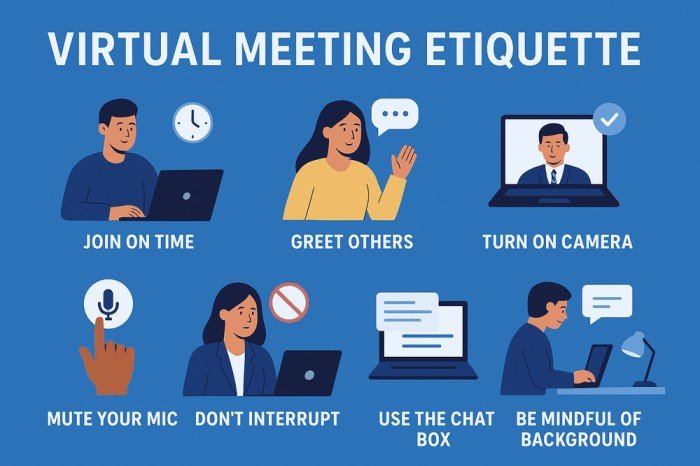
Your internet connection, camera, and microphone should all be tested at least 10 minutes before the meeting. Nothing derails a session faster than technical issues that could have been avoided.
Remember to update your video conferencing software. Wi-Fi is preferable to a wired connection, but use whichever is most stable. Leave a backup device available.
What is in the background of your meeting is also a message to the other attendees. Choose a neutral area, and avoid unnecessary distractions like clutter, posters, or moving objects. Only use virtual backgrounds if they look professional and stable.
Position yourself in front of natural light or use a ring light. The camera should be at eye level, so adjust its position if it is too high or too low.
Place solid color, professional and appropriate, clothing on the top of your bottom to complete the outfit. Neat and professional grooming also makes a positive change, however, it is to be used with dressing as you would for an office meeting.
Familiarize Yourself with the Agenda and Materials
Look through any shared materials or reports before the meeting. Understanding the subjects and goals allows for more skillful participation.
Reduce Background Noise
Close unnecessary windows and silence your phone. Let those nearby know that you’ll be in a meeting. If you’re in a communal area, put on noise-cancelling headphones.
Be on Time
Log into the meeting five minutes early. This demonstrates that you respect people’s time and gives you a chance to resolve any last-minute problems.
Starting the Meeting — Setting the Tone
The beginning of a meeting shapes its outcome.
1. Kindly Greet Participants
Use a friendly greeting and a little small chat to set a welcoming tone for your meeting. For example, you might start with, “Good morning, everyone. I hope you’re all doing well today.”
2. Introduce Yourself and Others
Once everyone in the meeting is introduced, it builds rapport and gives clarity on the people present.
3. State the Agenda and Goals
Make sure you state the meeting purpose and main points for discussion. This helps ensure everyone stays on track and minimizes off-topic discussions.
4. Set Ground Rules
Make sure you state any etiquette and behavior expectations that you would like everyone to follow, especially in bigger meetings.
Participants are to mute until it’s their turn to speak and use the “raise hand” or chat feature to interject questions.
Encourage Participation
Ask people to have their cameras on if they can. Seeing people’s faces helps keep attention and fosters connection.
During the Meeting — Professionalism in Action
When the meeting starts, your interaction and behavior are what impacts most.
1. Mute When Not Speaking
Typing sounds, other conversations, and pets can create distracting background noise. Keep your mic muted until it is your turn to speak.
2. Maintain Eye Contact and Good Posture
When talking, look at your camera and not at the screen. Sit properly without slumping; this shows that you are paying attention and your confidence.
3. Avoid Multitasking
If you are in the meeting, you should not check your emails and scroll your phone. It shows that you are not interested. You should stay focused because you wouldn’t text in a face-to-face discussion.
4. Be Mindful of Body Language
Nod to show that you are engaged. Fidgeting, eating, and other distracting movements should be avoided.
5. Use Clear and Concise Language
Especially with non-native speakers, you should slow down and be clear. Have defined contributions and let others speak, don’t monopolize the discussion.
6. Manage Screen Sharing Professionally
Close tabs and documents that are personal or unrelated before you share.
Say that you are going to share your screen before you do.
Enable “Do Not Disturb” mode to keep your notifications hidden.
7. Stay on Time
Leaders are responsible for keeping discussions on track. Keep to the agenda and the clock as best as you can.
8. Handle Interruptions Gracefully
If someone cuts you off, no problem. Wait for them to finish and then continue. Focus on the task at hand and the people you’re engaging with. Overlaps happen, and that’s especially true with virtual meetings.
9. Encourage Inclusivity
Watch for people who tend to speak less. Encourage them to engage with the group. You can use, “Let’s hear others on this” to keep people involved and the discussion polite.
After the Meeting — Closing and Follow-Up
The way you close a meeting is just as important as the content.
1. Summarize Key Points
Before you close, repeat the main decisions, who is responsible for what, and the deadlines.
2. Thank Participants
Thank them for their time and the joined contributions.
3. Share Meeting Notes or Recordings
Provide a summary of the discussion, key takeaways, and assigned tasks. If you have a recording or transcript available, include that as well.
4. Request Feedback
Did the meeting add value? What can improve for the next session?
5. Reflect and Improve
After the meeting, think about what worked well and what you can improve as a way to build collaboration with the team.
Advanced Virtual Meeting Etiquette
Moving beyond standard practices, contemporary meetings tend to need more subtle behavioral adjustments, especially when considering differences between global, hybrid, or diverse environments.
1. Hybrid Meeting Etiquette
- If some participants are in person and others are virtual:
- Ensure those joining remotely can see and hear everything.
- Avoid side conversations that disrupt the primary discussion.
- Assign a “virtual liaison” to keep an eye on the meeting chat and ensure everyone feels included.
2. Cross-Cultural Sensitivity
Different cultures can take on different meanings regarding tone and different gestures. Try considering the convenience of a time zone, holidays, and preferred communication styles.
3. Large Group Meeting Management
To help facilitate focus for a particular discussion, consider using breakout rooms. For the Q&A session, ask someone to serve as the moderator to the overall session to help manage the chaos.
4. Technical Glitches
When the internet drops, or a microphone malfunctions, take a slow, deep breath. Make a quick rejoin and an apology. Shift focus and move on. Avoid drawing attention to them.
5. Security and Data Privacy
No sensitive material should be visible or recorded without permissions. Password-protected links and encrypted tools should be used when appropriate.
6. Meeting Tools and AI
AI meeting assistants will be commonplace in 2025. Ensure that participants are aware when AI tools are in use and for what purpose.
Common Mistakes to Avoid
Even online meeting mistakes can happen to the best of us. Here are some of the most common mistakes to avoid.
- Joining late or unprepared
- Interrupting others
- Neglecting to mute
- Eating on camera
- Ignoring the chat or user reactions
- Not looking at the camera
- Leaving your camera off for an extended period of time
- Using distracting filters or backgrounds
- Screen sharing in a way that reveals private or sensitive information
- Not sending the promised follow-up after the meeting
- Be mindful of these mistakes to improve your overall presence in meetings.
The Future of Virtual Meeting Etiquette
As technology continues to advance, so do the norms for attending meetings virtually. Here are some current trends that are likely to define the future of online workplace professionalism.
1. AI Power
Some meeting tools now automatically paraphrase discussions, track and summarize action items, and flag important meeting points. Users of these tools should be taught responsible use.
2. V.R. and A.R.
As immersive meeting environments become available, new meeting etiquette will be needed in relation to avatars, gestures, and virtual body language.
3. Global Collaboration
Working together across borders is now the norm. Meeting etiquette will focus on inclusiveness, accessibility, and cultural intelligence.
4. Camera Fatigue
Some organizations are using “camera-optional” policies to reduce burnout and promote engagement through other means, such as active chat participation.
FAQs
1. What are the three most important rules of virtual meeting etiquette?
Be on time, pay attention, and be polite. These three basic principles guarantee professionalism and effectiveness.
2. Should I always have my camera on?
Yes, in most professional contexts this is the case. It facilitates engagement and trust. Having a camera on is mandatory for remote work or business meetings. However, if your internet connection is weak, or if your privacy is an issue, let the host know beforehand.
3. What if I am interrupted at home in a meeting?
When you are not speaking, mute your microphone. Clearly communicate boundaries to others in your home. If there are interruptions, excuse yourself for a moment and quickly concentrate on the meeting.
4. Is it rude to eat in a virtual meeting?
Unless it’s a casual team gathering or an extended working session, eat off camera. It is distracting, and most people consider it unprofessional.
5. What are some rules for keeping a virtual meeting?
Engaging visuals, polls, and discussions in breakout rooms are great tools. Encourage questions, and frequently summarize to help maintain an interactive tone.
6. What if someone monopolizes the discussion?
As a host, it is important to tactfully cut in. Balance is the key to maintaining respect of the group.
7. What is the maximum number of people in a virtual meeting?
The optimal number is 30 to 60. If the meeting is longer, it is important to take short breaks for the participants to maintain attention and prevent burnout.
8. Are virtual backgrounds acceptable?
Yes, provided they are professional and unobtrusive. Do not use animated or overly playful backgrounds, as they can appear casual.
Conclusion
With virtual meetings, businesses are able to conduct their work from anywhere in the world, no matter the distance or time difference. This means that businesses have no need of temporary solutions, virtual meetings are here to stay. This has meant that practicing good virtual meeting etiquette is not about following the rules; it’s about maintaining an atmosphere of professionalism and harmony.
Proper preparation, courteous engagement, and thoughtful follow-up not only smooth the meetings but also strengthen professional bonds and build personal reputation.
As conferencing will be replaced with virtual meetings, your online conduct will represent your reputation. Follow these tips to put forward the best version of your professionalism in every virtual meeting.