Introduction
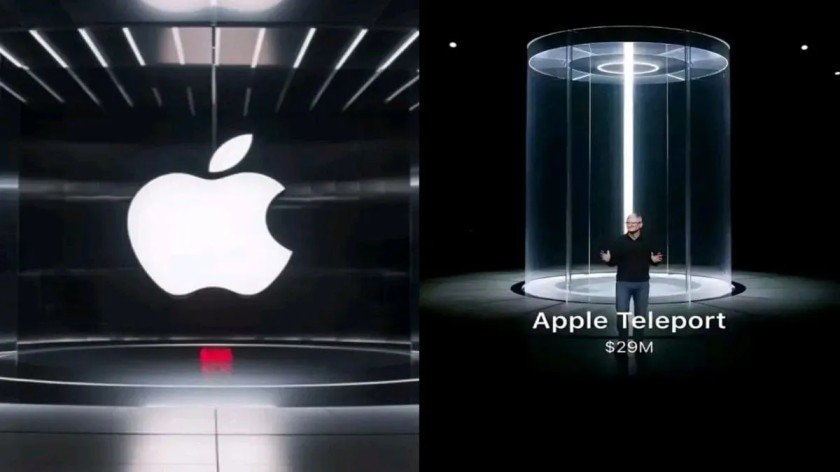
Lately, Apple Teleport has become a hot topic lately. On social media, forums, and tech blogs, people claim Apple has created, or is about to release, a device that can teleport objects and people to different locations instantly.
But, is Apple Teleport real? Did Apple manage to achieve one of the most challenging dreams of science fiction? Or is it just a viral rumor based on poorly understood patents, overly ambitious marketing suggestions, and the expectation of innovation from the company?
In the following sections, I will explore the volcanic rumor about Apple Teleport, and Apple’s actual technological achievements to conclude the Apple “teleportation” mystery. By the end, I will explain the origin of the fascination and the reality of “teleportation.”
What Is Apple Teleport?
“Apple Teleport” is about as far-fetched as sci-fi can get. An Apple-branded teleportation device to disassemble matter and reassemble it at a different location. But, the closest thing to teleportation to Apple is the word “teleport” and it doesn’t feature in any Apple press release, product announcement, or patent.
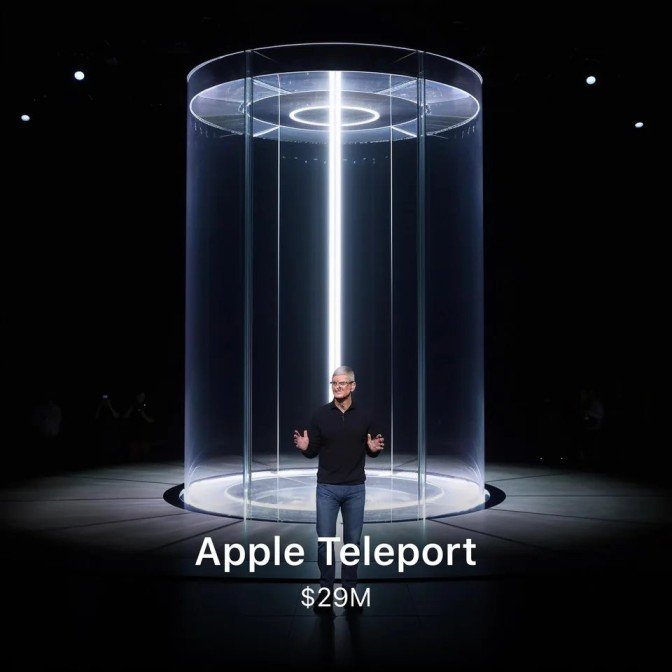
The story behind the phrase “Apple Teleport” traces back to a viral rumor that made its way to Reddit, TikTok, and various tech forums. Some users got excited over fake videos and AI-generated mock-ups that showed what seemed to be Tim Cook exposing a teleportation pod during a keynote. Others followed the story to a speculative blog that combined Apple’s real technology like spatial computing and mixed reality with outlandish theories on quantum teleportation research to build a narrative around Apple having teleportation technology.
“Apple Teleport” is a myth, built on misplaced assumptions and the active human imagination. Still, it caters to the phenomenon of Apple’s desktop teleportation science fiction to everyday reality.
Origins of the Apple Teleport Rumor
Apple teleportation tech rumors started circulating in the summer of 2024, a few weeks after Apple Vision Pro’s launch, the first spatial computing headset. Some users speculated that the promotional materials imbued with marketing phrases like “a new dimension of presence” and “experience anywhere” signaled teleportation technology.
This was followed by AI-generated videos that showed Apple engineers “teleporting” objects through screens as well as fake presentation videos and synced audio of Apple executives. These viral clips were repeated by tech blogs without verification, creating an echo chamber on the internet.
Other sources, like Coruzant.com and AboutChromebooks.com, later explained that the teleportation allusions were metaphorical. They pertained to digital teleportation within augmented reality and virtual reality environments, not the transport of physical matter. Nevertheless, the expression Apple Teleport had already established itself within popular culture.
To comprehend the reason for the popularity of this rumor, it is necessary to examine the big picture of teleportation.
The teleportation described by physicists is not the instantaneous transport of matter. Rather, it is the transfer of quantum information between entangled particles over a distance. Quantum teleportation can be and has been achieved with photons and atoms, but only at microscopic scales. The physical matter of the original particle is not moved; instead, the quantum state of the particle is captured and then reproduced in another particle of matter.
The amount of information and energy required for the teleportation of objects, and especially a human, is incomprehensibly huge and far beyond what humanity has today. The concept of teleportation in popular culture, and especially science fiction, has been instant travel and the Apple brand, with its surprising minimalist design, fits in perfectly with this concept.
What Apple Is Actually Building?
While Apple Teleport as a physical device doesn’t exist, Apple is indeed working on technologies that simulate aspects of teleportation in the digital sense. These advancements revolve around spatial computing, augmented reality (AR), virtual reality (VR), and advanced networking.
Let’s break down what Apple is really developing that may have fueled the teleportation fantasy.
1. Spatial Computing and Apple Vision Pro
The Apple Vision Pro, launched in 2024, marked Apple’s first step into what it calls spatial computing an evolution of AR and VR that blends digital content seamlessly into the physical environment.
With Vision Pro, users can enter immersive digital spaces, interact with 3D objects, and experience lifelike presence through high-resolution visuals and real-time motion tracking. In essence, the headset allows users to “teleport” virtually to other locations, collaborating or exploring environments as if they were physically there.
Apple’s messaging—phrases like “You’re no longer limited by a screen”—undoubtedly contributed to the “teleport” metaphor. Vision Pro represents a leap toward experiential teleportation, where the body stays in place, but the mind and senses are transported digitally.
2. Advanced Communication and Holographic Interaction
Working toward integrating spatial communication in future FaceTime versions and Apple Vision models is yet another focus for Apple Research. The possibility of holographic calls is on the horizon, with users turning into life-sized, 3D holograms, able to maintain eye contact and shift their bodies in real time to engage with one another.
This would serve as a telepresence system, with the ability to ‘materialize’ and ‘disappear’ anywhere in real time. While it is not literal teleportation, it serves the emotional and practical need of being present with someone miles away.
3. Integration of AI and Real-World Mapping
With the launch of Apple Intelligence, the first real on-device AI coupled with spatial aware Apple products, Apple is integrating new levels of AI technology. Consider this, you are instructed to visualize a certain space, and you point your iPhone or Vision Pro, and it instantly displays modern furniture, layered artwork, or even people in the space.
The convergence of the physical and the digital worlds along with AI technology, computer vision, and lidar mapped components to teleportation, explains why users reach for sci-fi explanations. The level of spatial AI technology surpasses tele-virtual real time layered reality technology.
Reason People Believed Apple Teleport Could Be Real
1. Apple’s History of Innovation
Apple has a history of turning cutting-edge ideas into practical technology. People still remember the revolution with the iPhone and the Apple Watch’s innovations with health technology. People’s thoughts on Apple Teleport usually begin with the people thinking the Apple team did it yet again.
2. The Influence of Viral Media and Deepfakes
Now it’s possible to generate a convincing fake video using AI. Many people saw a clip with a fake Tim Cook unveiling a teleportation device. The Apple sham and the fake video realism made possible to confuse reality vs. expectation.
3. Misunderstanding of Apple’s Patents
It is common to see Apple files patents related to blue sky thinking. Concepts like “spatial positioning for remote object manipulation in a remote collaborative system” and “digital avatars in shared virtual spaces” were examples in 2023. These blogs were evidence to teleportation prototypes.
4. Marketing Language
Apple marketing refers to emotion with poetic language. People really feel like the advertisements sell with phrases like “a leap forward,” “presence redefined,” and “beyond imagination.” When this language gets amplified on the internet it is easy to take the metaphor and believe it literally.
Digital Teleportation: The Real Meaning Behind the Myth
If “Apple Teleport” exists in any form, it’s as a digital teleportation experience—a fusion of virtual presence, AI communication, and sensory immersion.
In this sense, Apple Teleport isn’t about moving atoms—it’s about moving experiences.
Imagine this: You put on your Apple Vision Pro, and within seconds, you’ve moved to a virtual replica of your friend’s living room located in another country. You talk, gesture, and interact as if you were physically there, despite the thousands of kilometers separating you. You haven’t moved physically, but it sure feels like it.
This is the essence of Apple’s spatial computing vision: eliminating distance for immersive digital connection. It’s not physical teleportation, but it fulfills the core human need to bypass barriers of time and space.
Could physical teleportation ever become real?
While Apple itself is not working on physical teleportation, scientists across the globe continue to scan for the holy grail of quantum teleportation, as part of quantum computing and cryptography.
1. Current state of quantum teleportation.
In 2022, researchers achieved quantum teleportation across a 44-kilometer fiber network, using entangled photons. However, this only transferred information, not matter. And scaling such processes to macroscopic objects–or humans–is currently an insurmountable technological challenge.
2. Theoretical Obstacles
To achieve physical teleportation, one would need to:
– Scan every atom comprising a human body (approximately 10²⁷ atoms).
–Transmit that information instantaneously, surpassing any known bandwidth.
– Recostruct equivalent matter completely at the other end.
Beyond the practical, there are also ethical and philosophical questions. Would the person “teleported” still be the same consciousness, or would it be merely a copy?
3. Apple’s Possible Future Role
As a leader in experience design, data processing, and AI, Apple does not need to be a particle physicist to realize the potential of teleportation. Just as Apple pioneered personal computing, Apple will develop user-interface systems and consumer applications once teleportation becomes a reality.
Apple Teleport in Popular Culture and Media
The myth of Apple Teleport has sparked numerous discussions online, blending humor, fascination, and skepticism.
In one satirical article, the “teleported Apple with a bite missing” was a nod to Apple’s logo. Some creators on social networks used “Apple Teleport” to describe rapid innovation, claiming Apple’s design language makes technology so seamless that it feels magical.
Tech analysts referred to the rumor as a sign of public faith in Apple’s ability to change reality. Instead of dismissing the idea, many began to think of Apple Teleport as a cultural meme—a symbol of technological wonder.
The Allure of Teleportation
What is the fascination with teleportation, and why does it seem to be increased by the mention of Apple?
1. A Need for Instant Gratification
Today’s customers want everything instantly, such as immediate communication, and prompt results. Teleportation is the ideal solution for instant gratification.
2. Boredom and Mastery
The ability to teleport represents the ability to stretch and defy boundaries. Such freedom and control over the distances is a strong Apple value.
3. The Mystique of the Apple Brand
The association of Apple with teleportation is the culmination of the brand’s elegance and mystique, control over space is the ultimate frontier, a dimension to the brand myth.
The Closest Apple Innovations That Feel Like Teleportation
While Apple does not offer teleportation machines, a few innovations provide experiences similar to it.
1. SharePlay and Collaborative Spatial Computing
Apple’s SharePlay feature enables a group to work on a project as if they are in the same location. With the Vision Pro integration, it can provide more of a shared presence.
2. Continuity and Ecosystem Integration
Apple devices provide task handoff capabilities which allows the user to move tasks among devices in a fluid and seamless way. Starting an email on one device and finishing it on another instantly is a form digital teleportation of the context and data.
3. AirDropping and Sharing via Ultra-Wideband
Close proximity networking offers AirDrop. Additions to Ultra-Wideband could make data sharing and proximity networking real-time as well as device pairing point and tracking.
4. Personalized Avatars and FaceTime in 3D
The development of Vision Pro Persona avatars allows communication as if two parties are in the same room. Real-time double rendering creates the double illusion of being in two places at once.
How to Tell the Difference Between Hype and Reality
Valuable insights help readers and passionate techies figure out a way to assess popular claims.
Step 1: Check the Sources
Apple’s newsroom and major publishers like Bloomberg, The Verge, and TechCrunch are valuable points of reference to assess the claims.
Step 2: Assess the Language
Claims of a secret being leaked or a study proving something out of the realm of possibility are the kinds of phrases one should watch out for.
Step 3: Use Reverse-Image Search
One way of verifying a video or image of Apple is to look for the video or image s copy and track the source down. Many “Apple Teleport” visuals come from concept artists or AI illustrators.
Step 4: Know the Coping Capacity of Technology
Having a basic understanding of a stimulus helps in understanding claims that are made. Most claims are made that are in violation with basic laws of science.
The Future of Spatial Computing: Apple’s Real Roadmap
While real teleportation is still fiction, Apple’s Roadmap for Spatial Computing describes something equally transformative.
2025–2027: The Vision Pro and expansion of lighter, more affordable models.
2028–2030: The addition of communication holograms in real time.
Beyond 2030: The development of spatial AI, neural interfaces, and other techno-scientific systems in order to provide fully immersive ecosystems where users can feel bodily present in any digital environment.
In that sense, “Apple Teleport” may one day describe not moving through space, but fully dissapearing through distance.
5 Best Alternatives to Apple Teleport
If Apple Teleport is bringing excitement, ropes of technologies that provide the different but equally immersive and presence-based experiences are avaiable. Although these technologies do not achieve the moving of physical matter, they do the bridging of people and places in what feels like a teleportation.
1. The Meta Quest 3( Meta Platforms)
Overview
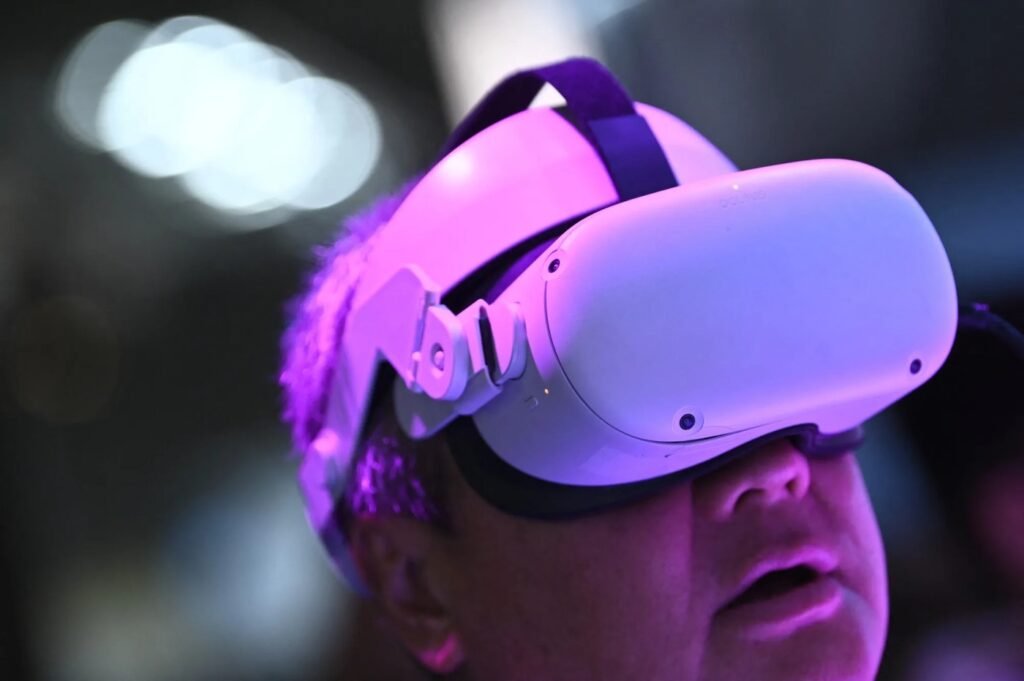
One of the most advanced standalone VR headsets, The Meta Quest 3 in designed for both gaming and professionals. It fully immerses the users into the virtual worlds while enabling real-time interaction with other users.
Key Features
- High resolution monochrome passthrough cameras.
The Snapdragon XR2 Gen 2 VR processor.
Social “teleportation” experiences through Horizon worlds. - For intuitive control, there is hand and eye tracking.
Pro:
- Engaging visuals and realistic surround sound.
- Extensive community and content ecosystem.
- More cost-effective than Vision Pro.
Con:
- Limited battery life (2–3 hours).
- Visual fidelity is less than Apple Vision Pro.
Pricing:
- Starts at $499.99 USD for the base model.
2. Microsoft HoloLens 2
Overview:
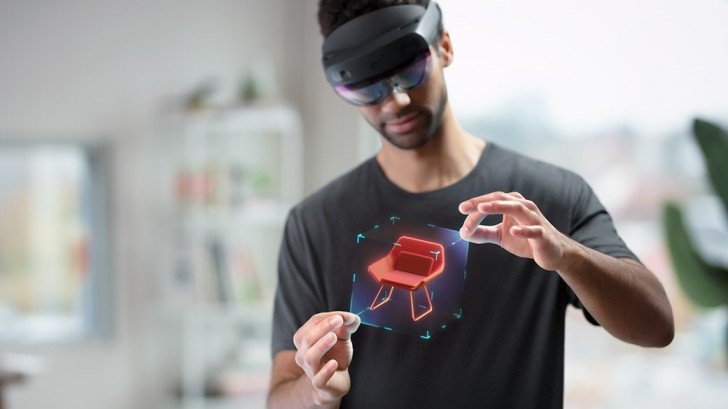
Microsoft’s HoloLens 2 is focused on enterprise-grade mixed reality, combining the physical and digital realms for collaboration and design. Collaboration in design is used in healthcare to construction and many other industries. In remote industries, presence is tangible.
Key Features:
- Precision spatial mapping and gesture mapping.
- Enterprise app holographic rendering.
- Microsoft Mesh for remote collaboration.
Pro:
- Perfect for enterprise and professionals for hand free.
- Long session and excellent comfort.
- Microsoft 365 integration for enterprise.
Con:
- Enterprise ship is conditioned on high price and limits consumer to high cost.
Pricing:
- Set to $3,500 USD for enterprise use.
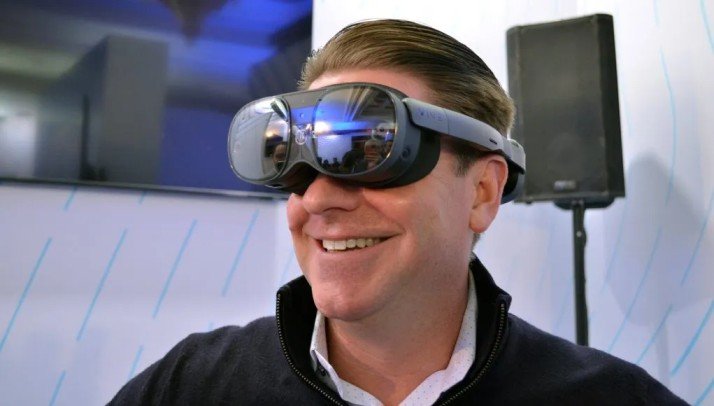
3. HTC Vive XR Elite
Overview:
HTC Vive XR Elite is the most compact in design but powerful mixed-reality headset to use in immersive environments and high-end gaming. It is capable of teleporting and real-time 3D interactions to construct and design and lifelike rendering.
Key Features:
- Lightweight and modular design.
- Precision movement with 6DoF inside-out tracking.
- Passthrough mixed reality and VR PC compatibility.
Pros:
- User-friendly and convenient portability.
- Impressive accuracy across all tracked movements.
- Active and involved developer community.
Cons:
- Battery life is lower than average, lasting around 2 hours.
- Might be seen as overpriced for people who are not serious users.
Pricing:
- Price for the average consumer is approximately $1,099 USD.
4. Magic Leap 2
Overview:
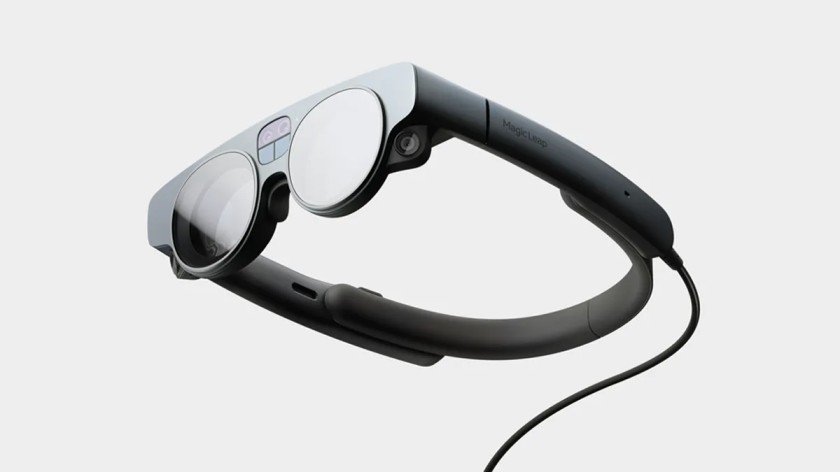
This is the first professional MG AR headset focusing on digital co-creation and 3D visualization. With its focus on spatial awareness, it is designed for remote Interactive design, medical training, and experiences designed for situational immersion.
Key Features:
- Improved FoV (Field of view) than the previous versions.
- A dimmer mode for better contrast in brightly lit environments.
- Enterprise SDK for custom spatial apps.
Pros:
- Real Integration of AR. It is really designed for industrial and design use.
- Reasonably light and comfortable.
Cons:
- Tethered computing power for lower -end processing nodes.
Pricing:
- Starting at 3,299 USD
5. Varjo XR-4 Series
Overview:
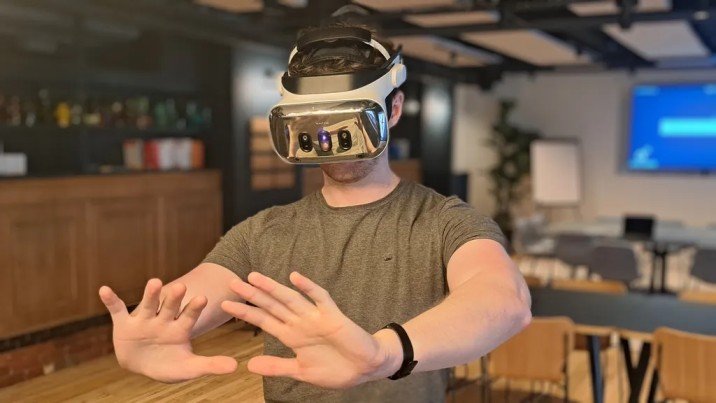
The Varjo XR-4 line is the first ultra-hyper-fidelity XR mixed reality spatial computing products. It is designed for hyper-remote interactions. Major corporations, simulation and training research centers are clients.
Key Features:
- Every 4K-per-eye, 2 screens.
- LiDAR and stereo RGB sensors.
- Unreal Engine and Unity integration.
Pros:
- Ultra professional design.
- Simulation and design use.
- Unmatched build quality and comfort.
Cons:
- Price is exorbitant.
- Requires a powerful PC.
Pricing:
- $3,990 USD and up, target audience is mainly professionals.
Frequently Asked Questions
1. Is Apple Teleport a real product?
Apple Teleport is not real, nor is it announced. This was created from online speculation and AI generated imagery.
2. Are there real alternatives to Apple Teleport?
Certainly. Teleportation hardware includes Meta Quest 3, Microsoft HoloLens 2, HTC Vive XR Elite, Magic Leap 2, and Varjo XR-4. These technologies fully immerse you into a virtual world.
3. What other technology is Apple developing?
Apple is developing Vision Pro, spatial computing, and AI that creates environments with powerful digital presence—as far as real, physical teleportation is concerned, Apple isn’t developing that.
4. Could true teleportation ever become a reality?
On the forward, quantum-physics realm, yes, with information. Physical teleportation is a huge scientific and ethical grey area.
5. Which alternative offers the best consumer experience?
Meta Quest 3 offers the most consumer friendly experience. Most people like the price, the immersion, and the overall ease of use the most.
Conclusion
Apple Teleport may not exist as a real teleportation machine, but its viral rise reveals something deeper about technology and imagination. It represents our longing for instant connection and our belief that innovation can defy limits.
Although we still have to wait for teleportation to become a reality, we can already experience digital teleportation with spatial computing devices like Vision Pro, Meta Quest 3, and HoloLens 2. These devices bring us closer to a time when personal interaction does not depend on geographical location.
So, in that sense, Apple Teleport is not a myth—it is a metaphor for a vision within reach for the entire technology industry: cohesion and the dissolving of frontiers between the virtual and the physical.